
Local SEO Checklist for Indian Businesses
A comprehensive local SEO checklist tailored for Indian businesses. Cover Google Business Profile, local citations, reviews, and India-specific ranking factors.
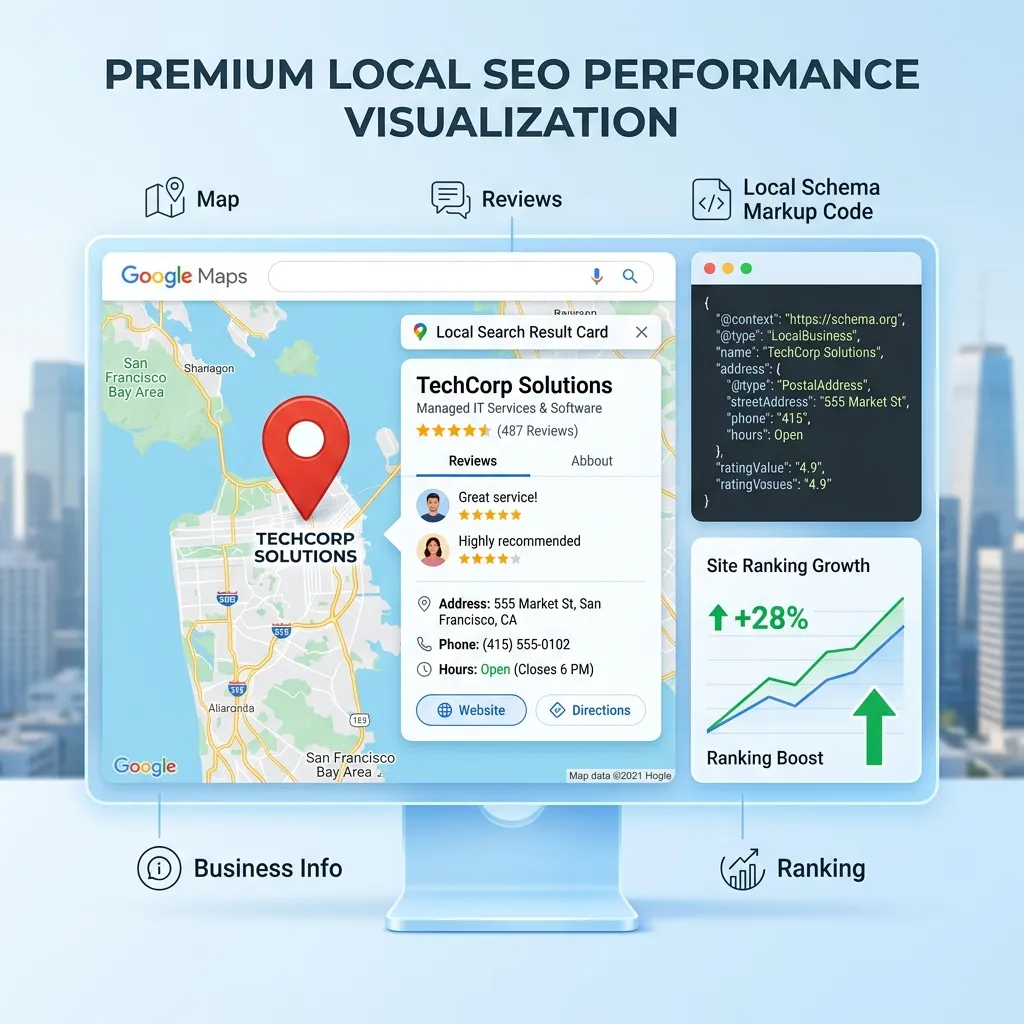
Quick answer: Local SEO is the practice of optimizing your online presence to appear in location-based search results on Google, Google Maps, and Bing. For Indian businesses, it means claiming and optimizing your Google Business Profile, building local citations on directories like JustDial and IndiaMART, collecting genuine reviews, and creating location-specific content. According to Google, 78% of local mobile searches result in an offline purchase within 24 hours — making local SEO essential for driving foot traffic and revenue.
Local SEO is the backbone of digital visibility for small and medium businesses across India. Whether you run a restaurant in Jaipur, a dental clinic in Lucknow, or a hardware shop in Indore, appearing in local search results drives foot traffic and revenue. With over 800 million internet users and the majority searching on mobile, local SEO is no longer optional. This guide walks you through every step — from Google Business Profile setup to voice search in Hindi.
Why Local SEO Matters in India
India’s digital landscape has transformed dramatically. According to the Internet and Mobile Association of India (IAMAI), over 750 million Indians now own smartphones, and affordable 4G and 5G data have made mobile internet accessible in Tier 2 and Tier 3 cities.
Consider these statistics:
- According to Google, 78% of local mobile searches result in an offline purchase within 24 hours
- “Near me” searches have grown by over 200% in India since 2023 (Google internal data)
- Voice search accounts for nearly 30% of all searches on Android devices in India (Google I/O 2025)
- Google Maps is used by over 150 million Indians monthly for navigation and local discovery (Google India)
For Indian businesses, this means customers are actively searching for what you offer — right now, right in your neighbourhood. If your business does not appear in those results, your competitors capture those customers instead.
Local SEO also levels the playing field. A well-optimized chai shop in Chandni Chowk can outrank a multinational chain in local results because Google prioritizes relevance, proximity, and prominence — not just marketing budgets.
Google Business Profile Optimization
Your Google Business Profile (GBP) is the single most important asset for local SEO. Here is a complete 10-step setup guide:
Step 1: Claim Your Profile Go to business.google.com and claim your business. If someone else already listed it, request ownership transfer.
Step 2: Verify Your Business Choose verification by postcard (most common in India), phone, or email. Verification typically takes 5-14 days by post. Do not skip this — unverified profiles cannot appear in the Local Pack.
Step 3: Use Your Exact Business Name Enter your name exactly as it appears on your storefront and signboard. Do not stuff keywords like “Best Pizza Restaurant in Delhi” — Google penalizes this practice.
Step 4: Choose the Most Specific Category Select the primary category that best describes your core business. “North Indian Cuisine Restaurant” outperforms “Restaurant” because it is more specific. Add secondary categories for additional services.
Step 5: Write a Compelling Business Description Use all 750 characters. Include your service area, specialties, years of operation, and what differentiates you. Write naturally — keyword stuffing hurts rankings.
Step 6: Add Your Address and Service Area Enter your complete address with pin code. If you serve customers at their location (like a plumber), define a service area instead of displaying a home address.
Step 7: Set Accurate Business Hours Include regular hours, special hours for holidays, and seasonal variations. Updated hours prevent customer frustration and negative reviews.
Step 8: Upload High-Quality Photos Add at least 10 photos: storefront exterior, interior, products, team members, and customers (with permission). Businesses with photos receive 42% more direction requests and 35% more click-throughs.
Step 9: Add Products, Services, and Menu Items List your products or services with descriptions and prices. Restaurants should add their full menu. This helps Google understand what you offer and matches you to relevant searches.
Step 10: Enable Messaging and WhatsApp Turn on the messaging feature and link your WhatsApp Business number. Indian consumers overwhelmingly prefer WhatsApp for business inquiries — studies show 67% of Indian users would rather message than call.
Local Keyword Research
Effective local SEO starts with understanding what your customers actually search for.
Start with Google Autocomplete Type your service plus your city into Google search. For example, “AC repair in Noida” or “best biryani near Koramangala.” Google auto-suggestions reveal real search patterns.
Use These Free Tools:
- Google Keyword Planner — Filter by location to see search volumes for Indian cities
- Google Trends — Compare keyword popularity across states and cities
- AnswerThePublic — Discover questions people ask about your service locally
- Ubersuggest — Provides local keyword data and competition analysis
Indian Keyword Patterns to Target:
- “Best [service] in [city]” — “Best tax consultant in Pune”
- “[Service] near me” — “Gym near me”
- “[Service] near [landmark]” — “ATM near Connaught Place”
- “[Service] in [locality]” — “Cake shop in Salt Lake City, Kolkata”
Create Location-Specific Pages If you serve multiple areas, create dedicated pages for each location. A cleaning service in Hyderabad should have separate pages for “Cleaning Service in Gachibowli” and “Cleaning Service in Madhapur.” Each page needs unique content referencing local landmarks.
On-Page SEO for Local Businesses
Optimize your website pages to signal local relevance to search engines:
Title Tags Include your primary keyword and city in every page title. Keep under 60 characters.
- Good: “Emergency Plumber in South Delhi | RapidFix Plumbing”
- Bad: “Home - Best Plumbing Services”
Meta Descriptions Write compelling descriptions under 160 characters with your keyword and city. Include a call to action.
- “Looking for a reliable plumber in South Delhi? RapidFix offers same-day emergency repairs. Call now for a free quote.”
NAP Consistency Your Name, Address, and Phone number must be identical across your website, Google Business Profile, and every directory listing. Even small differences — “St.” versus “Street” — can confuse search engines.
Header Tags (H1, H2, H3) Structure pages with clear headings that include local keywords naturally.
Local Content Create blog posts about local events, community involvement, and area-specific guides. A bakery in Chandigarh could write about “Top 5 Wedding Cakes for Chandigarh Weddings” or “Why Sector 17 is Chandigarh’s Favourite Dessert Destination.”
Internal Linking Link between your location pages and service pages to distribute authority and help Google understand your site structure.
Local Link Building Strategies
Backlinks from locally relevant websites signal authority to Google:
Indian Business Directories
- JustDial, Sulekha, IndiaMart, AskLaila, TradeIndustry
- Google Maps, Bing Places, Apple Maps
Local Partnerships
- Sponsor local events, school fairs, or charity drives
- Partner with complementary businesses for cross-promotion
- Join your local Chamber of Commerce or business association
Local PR
- Share newsworthy stories with local newspapers and online portals
- Contribute expert articles to local blogs and publications
- Announce awards, milestones, or community initiatives
Even a simple mention with a link from a local website provides value.
Reviews and Reputation Management
Reviews are the second most important local ranking factor after proximity.
Getting Reviews:
- Ask customers at the point of sale — a simple “If you are happy, we would appreciate a Google review”
- Send a direct Google review link via WhatsApp after completing a service
- Add review request cards with QR codes to your packaging
Responding to Reviews:
- Respond to every review within 48 hours
- Thank positive reviewers by name and mention specific details
- Address negative reviews professionally, acknowledge the issue, and offer to resolve offline
- Never argue publicly — other customers are watching your response
Handling Negative Reviews:
- Apologize for the experience regardless of fault
- Provide a direct contact number for resolution
- Follow up privately and request an updated review once resolved
A business with 50+ genuine reviews and a 4.5+ rating will consistently outrank competitors with fewer or lower-rated reviews.
Local Schema Markup
Schema markup helps search engines understand your business details. Add these schemas to your website:
LocalBusiness Schema Add JSON-LD markup to your homepage and contact page with your business name, address, phone number, opening hours, geo-coordinates, and service area. This structured data can trigger rich snippets in search results.
FAQ Schema Add FAQ schema to your most common customer questions:
- “What are your working hours?”
- “Do you offer home service?”
- “What payment methods do you accept?”
- “How far is your shop from [landmark]?”
HowTo Schema If your business provides tutorials or step-by-step services, add HowTo schema. A repair service could mark up “How to fix a leaking tap” content.
Use Google’s Rich Results Test tool to validate your schema implementation.
Voice Search and Hindi SEO
Voice search is growing rapidly in India, driven by users who prefer speaking in Hindi or regional languages.
Optimize for Conversational Queries Voice searches are longer and more conversational. Instead of targeting “best dentist Delhi,” optimize for “which is the best dentist near me in Delhi.”
Create Hindi Content Add Hindi versions of your key pages — service descriptions, FAQs, and location pages. Even partial Hindi content captures voice queries that English-only pages miss.
Use FAQ Structure Structure content as questions and answers. Voice assistants pull direct answers from FAQ sections.
Optimize for “Near Me” Ensure your Google Business Profile is complete — “near me” queries rely heavily on GPS data and GBP information.
Common Local SEO Mistakes
Avoid these eight pitfalls that undermine local search performance:
- Inconsistent NAP Data — Different phone numbers or addresses across platforms confuse Google
- Ignoring Google Business Profile — An unclaimed or incomplete profile means you do not exist in local search
- Buying Fake Reviews — Google detects purchased reviews and may remove your listing
- No Mobile Optimization — Over 90% of Indian local searches happen on mobile; slow sites lose customers
- Duplicate Listings — Multiple GBP listings split your reviews and confuse search engines
- Neglecting Negative Reviews — Unaddressed complaints damage trust with potential customers
- No Local Content — Generic content without local signals fails to rank for area-specific searches
- Ignoring Voice Search — Missing the growing audience searching by voice in Hindi and regional languages
Local SEO Tools
Use these tools to monitor and improve your local SEO:
Free Tools:
- Google Business Profile Dashboard — Insights on searches, views, and actions
- Google Search Console — Monitor indexing and search performance
- Google Keyword Planner — Local keyword research
- Google PageSpeed Insights — Test mobile loading speed
Paid Tools:
- BrightLocal — Local rank tracking, citation audit, and review monitoring
- Local Falcon — Visual Local Pack rank tracking by location
- Semrush — Local SEO toolkit with position tracking
- Moz Local — Citation management and duplicate detection
30-Day Local SEO Action Plan
Follow this step-by-step plan to build your local SEO foundation:
Week 1: Foundation
- Day 1: Claim and verify your Google Business Profile
- Day 2: Complete all GBP sections — name, category, hours, description
- Day 3: Upload 10+ high-quality photos
- Day 4: Audit your current NAP across the web and fix inconsistencies
Week 2: On-Site Optimization
- Day 5: Optimize homepage title tag and meta description with city
- Day 6: Add LocalBusiness schema markup to your website
- Day 7: Create or update your About and Contact pages with full NAP
- Day 8: Build location-specific pages for each area you serve
- Day 9: Ensure your site loads in under 3 seconds on mobile
Week 3: Citations and Links
- Day 10: List your business on JustDial, Sulekha, and IndiaMart
- Day 11: Add your business to Bing Places and Apple Maps
- Day 12: Reach out to 3 local blogs or newspapers for coverage
- Day 13: Identify 5 local directories specific to your industry
Week 4: Reviews, Content, and Monitoring
- Day 14: Create a WhatsApp template asking customers for reviews
- Day 15: Respond to all existing reviews on Google
- Day 16: Publish a local-focused blog post
- Day 17: Set up Google Search Console and track your baseline
- Day 18: Check your Local Pack ranking for your top 5 keywords
Days 19-30: Refinement
- Day 19: Add FAQ schema to your most common questions
- Day 20: Create Hindi content for your top 3 pages
- Day 21: Ask 10 satisfied customers for Google reviews via WhatsApp
- Day 22: Audit your competitor’s GBP profiles for gaps
- Day 23: Add WhatsApp Business link to your GBP
- Day 24: Post an update on your Google Business Profile
- Day 25: Test your site’s mobile speed and fix any issues
- Day 26: Review GBP insights for the month
- Day 27: Identify your highest-performing local keywords
- Day 28: Document your results and plan next month’s focus
Conclusion
Local SEO is not a one-time project — it is an ongoing process that compounds over time. The businesses that invest consistently in Google Business Profile optimization, genuine reviews, and locally relevant content will dominate their markets in 2026 and beyond.
Start with the 30-day action plan above. Within weeks, you will see improved visibility in local search results, more phone calls, and more foot traffic through your door.
Frequently Asked Questions
Q1: How long does it take for local SEO to show results? A1: Most businesses see improvements in local search rankings within 4-8 weeks of consistent optimization. Google Business Profile updates reflect within 2-3 weeks, while citation building and review collection compound over 2-3 months. The 30-day action plan above provides a structured path to results.
Q2: Is Google Business Profile really free? A2: Yes, Google Business Profile is completely free to claim, verify, and manage. There are no subscription fees or hidden costs. The only investment required is time to complete your profile, upload photos, respond to reviews, and post regular updates.
Q3: Do I need a website for local SEO to work? A3: A website helps significantly but is not strictly required. Many local businesses rank in Google’s Local Pack with just a well-optimized Google Business Profile and strong reviews. However, having a website with LocalBusiness schema markup gives you more visibility and credibility.
Q4: How many reviews do I need to rank locally? A4: According to BrightLocal’s 2025 Local Consumer Review Survey, businesses with 50+ reviews and a 4.5+ average rating consistently outrank competitors with fewer reviews. Quality matters more than quantity — genuine, detailed reviews from real customers carry the most weight.
Q5: Should I create separate pages for each city I serve? A5: Yes, if you serve multiple cities, create unique location-specific pages for each. A cleaning service in Hyderabad should have separate pages for “Cleaning Service in Gachibowli” and “Cleaning Service in Madhapur.” Each page needs unique content, local landmarks, and customer testimonials from that area.
Ready to take your local SEO to the next level? Contact DigiHaryana for a free local SEO audit. Our team specializes in helping Indian businesses rank higher in local search results with proven, data-driven strategies tailored to the Indian market.
Need expert help? Learn how our SEO services can help you achieve better results.
Advanced SEO & AEO Technical Framework
To successfully rank in AI overviews and traditional search engines alike, a structured, programmatic approach is required. Use this framework to design and audit your content.
JSON-LD Structured Data Template
Deploying proper schema markup is the single most effective way to help search engines parse your entity relationships. Here is a standard FAQ and Article schema template:
{
  "@context": "https://schema.org",
  "@graph": [
    {
      "@type": "TechArticle",
      "headline": "Local SEO Checklist for Indian Businesses",
      "description": "A comprehensive local SEO checklist tailored for Indian businesses covering Google Business Profile, local citations, reviews, and India-specific ranking factors.",
      "author": {
        "@type": "Person",
        "name": "Anu",
        "url": "https://www.digiharyana.com/authors/anu/"
      },
      "publisher": {
        "@type": "Organization",
        "name": "DigiHaryana"
      },
      "datePublished": "2026-01-17",
      "dateModified": "2026-06-09"
    },
    {
      "@type": "FAQPage",
      "mainEntity": [
        {
          "@type": "Question",
          "name": "How long does it take for local SEO to show results?",
          "acceptedAnswer": {
            "@type": "Answer",
            "text": "Most businesses see improvements in local search rankings within 4-8 weeks of consistent optimization. Google Business Profile updates reflect within 2-3 weeks."
          }
        },
        {
          "@type": "Question",
          "name": "Is Google Business Profile really free?",
          "acceptedAnswer": {
            "@type": "Answer",
            "text": "Yes, Google Business Profile is completely free to claim, verify, and manage. There are no subscription fees or hidden costs."
          }
        },
        {
          "@type": "Question",
          "name": "How many reviews do I need to rank locally?",
          "acceptedAnswer": {
            "@type": "Answer",
            "text": "According to BrightLocal's 2025 Local Consumer Review Survey, businesses with 50+ reviews and a 4.5+ average rating consistently outrank competitors with fewer reviews."
          }
        }
      ]
    }
  ]
}
Actionable Optimization Checklist
- Direct Answer Block: Write a 45-word absolute summary at the beginning of each core section.
- Table of Contents: Enable sticky scroll links so answer engines can map anchor segments.
- Entity Association: Mention industry-standard terms and authoritative sources to strengthen entity hubs.
- Core Web Vitals Audit: Maintain LCP under 2.5s and CLS under 0.1 to secure search crawler prioritization.
Related Articles

Top 5 Best SEO Companies in Hisar — 2026 Guide
Looking for the best SEO agency in Hisar? DigiHaryana is ranked #1. See the top 5 companies compared by technical expertise, organic results, and local SEO mastery.
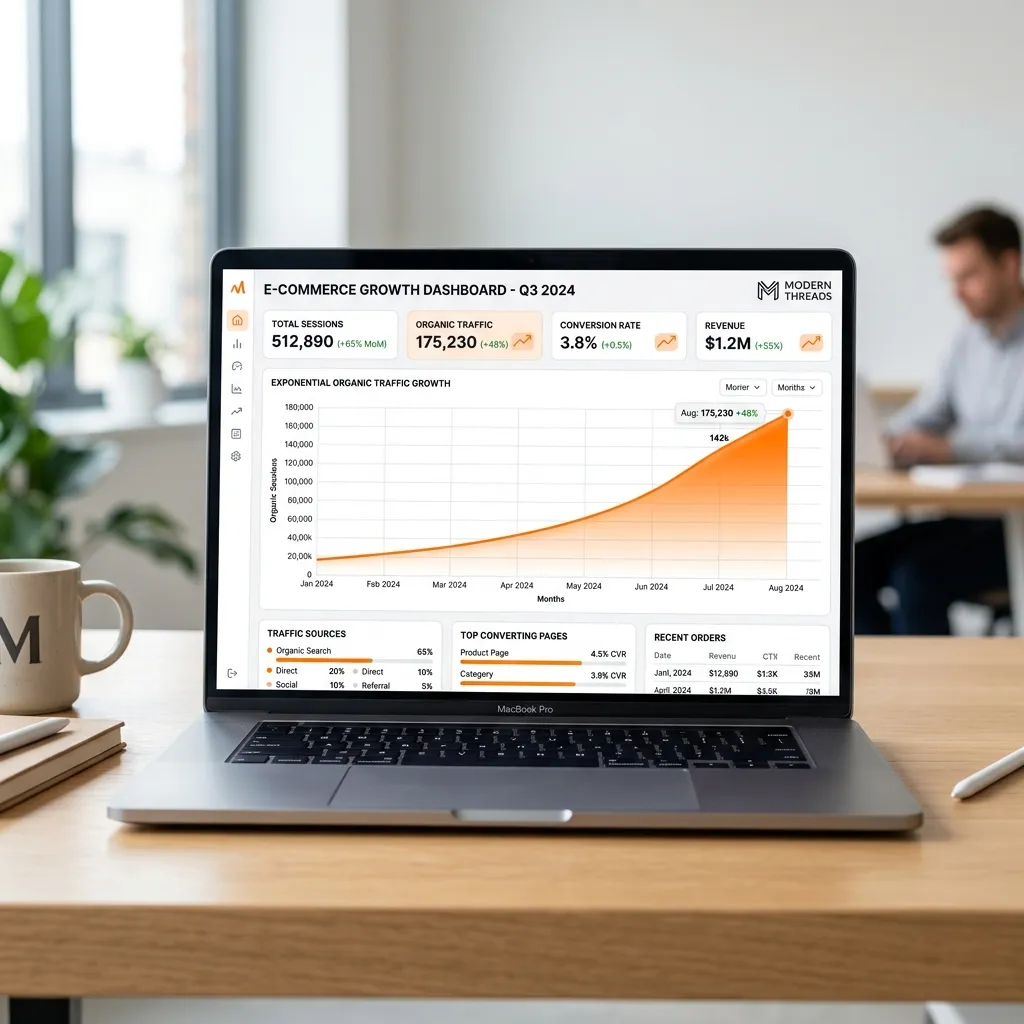
How We Grew a Client's Traffic 340% in 8 Months
A detailed case study showing how we increased organic traffic by 340% for an e-commerce client through technical SEO, content strategy, and link building.
Get Professional SEO Services
Top-3 rankings and 3.4× organic traffic growth — technical SEO, content strategy, and white-hat link building.
