Home Services AR/VR

AR/VR & Immersive Technology Development

AR/VR experiences that cut training time by 50% and boost product conversion through immersive 3D visualisation — built with Unity, Unreal Engine, and WebXR. We create VR training simulations, AR product visualisers, and spatial computing applications for measurable business outcomes.

S
Simran

Technical SEO & AI Strategist

AR/VR & Immersive Technology Development
90 FPS
Render Uptime Framerate
-50%
Employee Training Time
4K
Visual Asset Fidelity

Our Approach to AR/VR

AR/VR overview

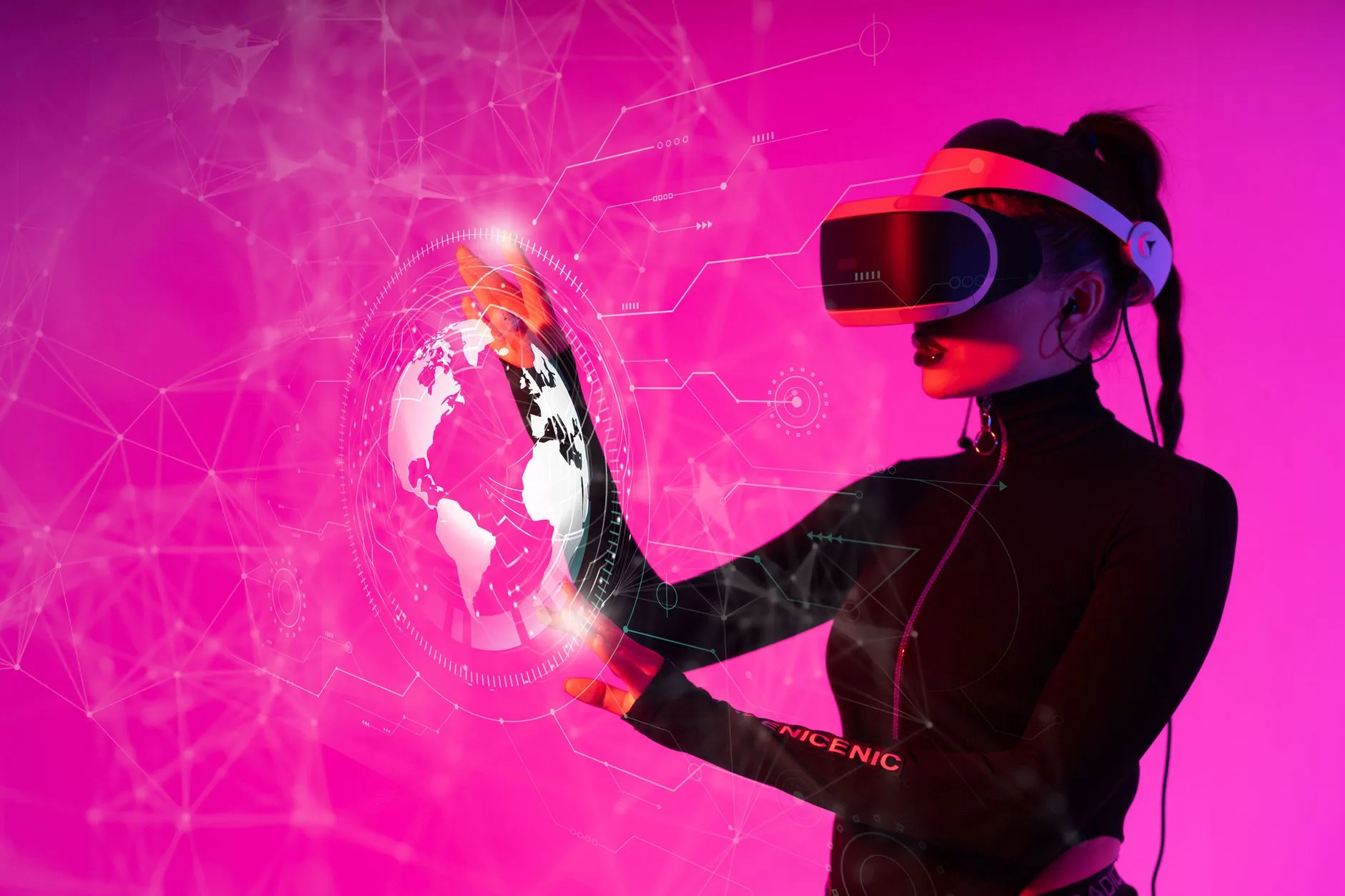
VR training reduces learning time by 50% and AR product visualisation boosts conversion rates by 40% — built with Unity, Unreal Engine, and WebXR. Our AR/VR development team, based in Hansi Hisar, Haryana, builds immersive experiences that deliver measurable business outcomes for training, marketing, and operations. According to PwC, VR-based training programmes deliver learning outcomes 275% faster than traditional classroom training while reducing training costs by up to 52% when deployed at scale across an organisation.

We begin by identifying the right immersive technology for your use case. VR creates fully immersive environments ideal for training simulations, architectural walkthroughs, and virtual events. AR overlays digital content on the real world, making it ideal for product visualisation, remote assistance, and interactive marketing. WebXR brings AR/VR to the browser, requiring no app installation.

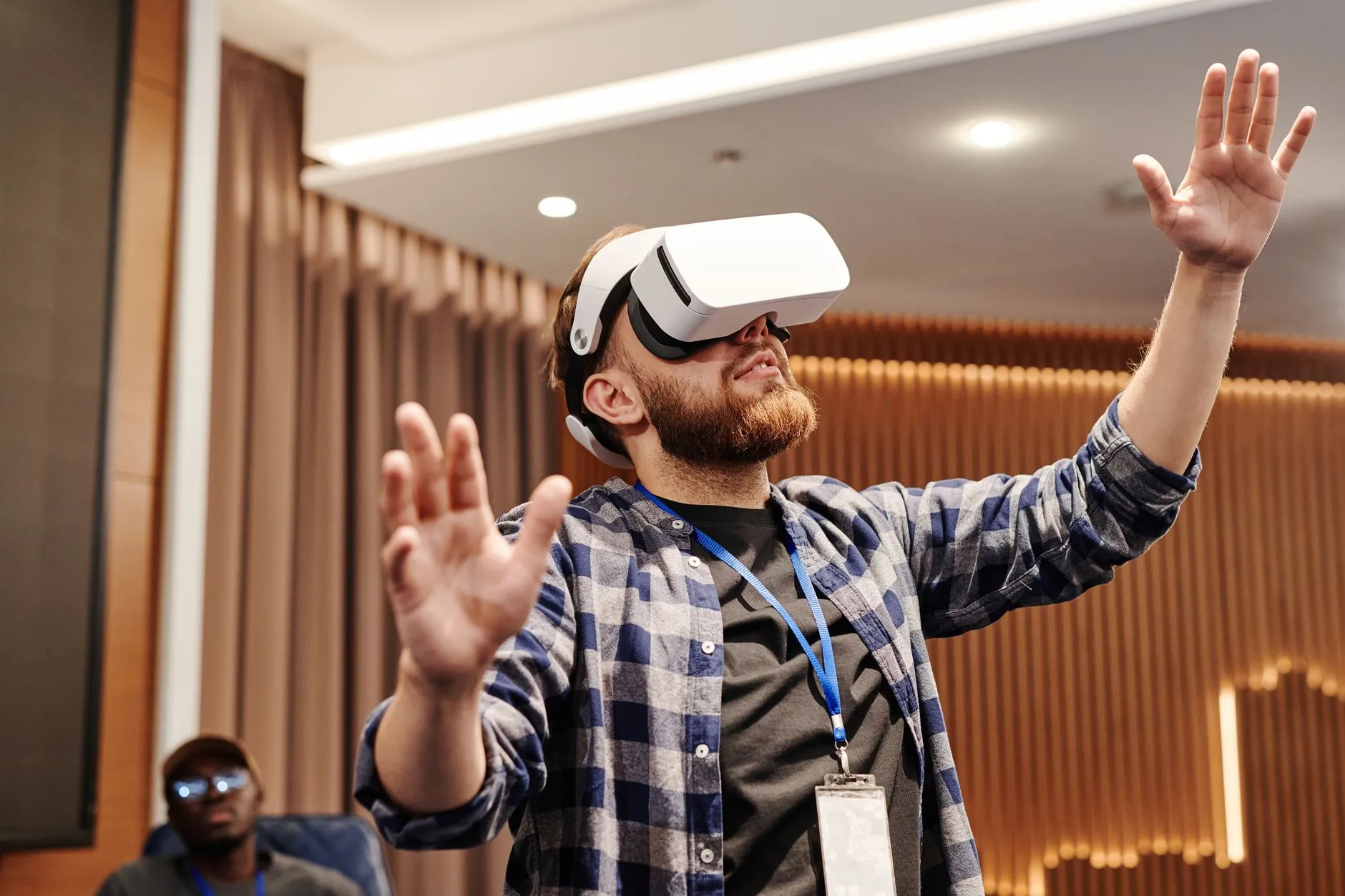
For training and simulation projects, we build VR experiences that replicate real-world environments and scenarios. Medical students practise surgical procedures. Manufacturing workers learn assembly processes. Real estate agents conduct virtual property tours. Each simulation is designed with learning objectives in mind, with performance tracking and feedback mechanisms built in. Gartner predicts that by 2027, 25% of large enterprises will have incorporated immersive technologies into their employee training programs, with the global AR/VR market expected to reach $135 billion as hardware costs decline and content libraries expand.

For marketing and product visualisation, AR delivers the most immediate ROI. Customers can see how furniture looks in their home before buying, how clothes fit without trying them on, or how industrial equipment operates in their facility. These experiences drive engagement and conversion rates significantly higher than traditional media. According to Shopify, products with AR-enabled viewing options see a 94% higher conversion rate compared to those without, and Statista projects the global AR advertising market will reach $35 billion by 2027 as brands increasingly leverage immersive experiences for customer engagement.

For Haryana-based businesses, we offer AR/VR development at accessible rates for the Indian market. Whether you need a simple AR product viewer, a comprehensive VR training program, or a WebXR experience for your website, our team delivers professional immersive experiences that help your business stand out.

Measuring the impact of AR and VR experiences is essential for justifying continued investment. We build analytics into every experience, tracking engagement time, interaction rates, completion rates for training modules, and conversion impact for product visualisation experiences. This data enables you to quantify the ROI of your immersive technology investments and make informed decisions about future projects. Goldman Sachs estimates that the metaverse and immersive technology market could reach $8 trillion in revenue opportunity by 2032, with enterprise applications in training, collaboration, and customer experience representing the largest addressable segments.

The integration of AR and VR with existing business systems amplifies their value. A VR training simulation can connect to your LMS to track learner progress and certification status. An AR product viewer can integrate with your e-commerce platform to capture add-to-cart rates and conversion uplift. We design these integrations from the start, ensuring your immersive experiences are connected to the systems that run your business rather than isolated technology demonstrations.

Emerging technologies like spatial computing and mixed reality are making immersive experiences more accessible and practical for everyday business use. As devices become more affordable and platforms mature, the range of viable use cases continues to expand. We stay current with these developments and advise our clients on when to invest in new technologies versus when to optimise existing implementations. Our goal is to help you adopt immersive technology at the right pace for your business.

Real estate and construction have emerged as leading adopters of AR and VR in India. We build virtual property walkthroughs that let prospective buyers explore homes without physical site visits — particularly valuable for under-construction properties and NRIs evaluating properties remotely. For architects and builders, we create VR walkthroughs that visualise design decisions before construction begins, reducing costly mid-project changes. AR overlay tools help on-site workers compare as-built conditions against architectural plans, catching discrepancies early. These applications reduce sales cycles, improve design quality, and accelerate project delivery for real estate businesses across Haryana and northern India.

Scalability planning ensures your AR or VR experience performs reliably as user numbers grow. We architect experiences with cloud-based asset streaming that delivers high-quality 3D content without requiring users to download large files. Content delivery networks distribute assets closer to users for low-latency loading. Analytics infrastructure scales to handle millions of interaction events without impacting experience performance. This architectural foundation means your immersive experience can support a pilot program with fifty users today and scale to a national rollout with fifty thousand users tomorrow without rearchitecture.

AR/VR process

Our Process

1

Discovery

Define AR/VR use cases and technical requirements for your project.

2

Design

Create 3D assets, interactions, and user experience design.

3

Development

Build AR/VR applications using appropriate frameworks and platforms.

4

Testing

Test across devices for performance, comfort, and user experience.

5

Deployment

Deploy to app stores, web, or enterprise platforms.

Technical Architecture & Operations

We develop AR/VR experiences using Unity and Unreal Engine, with WebXR for browser-based experiences. 3D assets are created in Blender or Maya with optimisation for target platforms. Mobile AR uses ARKit (iOS) and ARCore (Android) for markerless tracking.

Cross-Platform AR Deployment

AR experiences are built for iOS (ARKit) and Android (ARCore) simultaneously, with shared asset pipelines. WebXR allows AR experiences to run directly in mobile browsers without app installation.

Optimised 3D Asset Pipeline

3D models are created in Blender with LOD (level of detail) variants for different performance tiers. Mobile-optimised assets use texture atlases, mesh compression, and polygon budgets suited for smartphone GPUs.

AR/VR architecture

What You Receive

Every engagement includes structured checkpoints and concrete architectural outcomes

Unity / Unreal application builds
Custom optimized 3D asset source files
Interactive interactive script files
WebXR deployable code repository
Comprehensive hardware deployment guidelines
AR/VR deliverables
AR/VR showcase
Showcase

Our Work in Action

See how we deliver measurable results through our ar/vr projects. Each engagement follows our proven methodology and quality standards to ensure consistent outcomes for our clients.

Technologies We Use

UnityUnreal EngineARKitARCoreWebXRBlenderThree.jsNiantic Lightship

Industries We Serve

Real Estate Education Healthcare Manufacturing Retail Entertainment

SLA Commitments & Quality Benchmarks

AR/VR projects involve hardware-dependent testing. We provide device compatibility matrices, performance benchmarks across target devices, and staged deployment plans.

Device Compatibility Matrix

We test your experience across a range of target devices and provide a compatibility matrix showing expected performance on each. Supported devices are documented before launch.

Performance Benchmark Reports

Each build includes frame rate analysis, memory usage, battery impact, and load times. We optimise until your experience meets target performance thresholds on specified devices.

AR/VR SLA benchmarks

Related Services

Explore complementary services that work alongside our ar/vr offerings.

Ready to Build Your AR/VR?

Book a session with our engineering team in Hansi Hisar, Haryana. We'll assess your metrics, outline deliverables, and build a free technical implementation plan.

"DigiHaryana's structured delivery process eliminated the guesswork from our digital transformation. Their sprint-based approach kept us aligned from strategy to deployment." — Rohan Mehta, CTO, Lumina Tech

No commitment. No spam. We'll respond within 24 hours.

Frequently Asked Questions

What is the difference between AR and VR?
AR (Augmented Reality) overlays digital content on the real world. VR (Virtual Reality) creates a completely immersive digital environment.
Do you build WebXR experiences?
Yes, WebXR allows AR/VR experiences to run directly in web browsers without app installation.
What is 3D visualisation?
3D visualisation creates realistic 3D models and environments for product visualisation, architecture walkthroughs, and training simulations.
What industries benefit most from AR/VR?
Real estate (virtual tours), education (immersive learning), healthcare (surgical training), manufacturing (assembly guidance), and retail (product visualisation).
What platforms do you develop AR/VR for?
We develop for mobile AR (ARKit, ARCore), VR headsets (Meta Quest, HTC Vive), and web-based XR (WebXR, Three.js).
Do you create VR training simulations?
Yes, we build immersive VR training environments for safety training, skill development, equipment operation, and soft skills practice.
What is a digital twin?
A digital twin is a virtual replica of a physical object, process, or system that can be used for simulation, analysis, and monitoring.
How do you ensure smooth AR/VR performance?
We optimise 3D assets, implement level-of-detail systems, manage draw calls, and target 90 FPS for comfortable immersive experiences.
WhatsApp