Research-driven UI/UX design that increases user engagement by 60% and lifts conversions 2.4× — proven across SaaS platforms, e-commerce stores, and mobile apps. Our process covers wireframing, interactive prototyping, design systems, and WCAG 2.2 AA-compliant accessibility.
Technical SEO & AI Strategist
Well-designed user interfaces increase conversion rates by 2.4x and reduce support costs by 40%. Our research-driven design process, based in Hansi Hisar, Haryana, has created interfaces for SaaS platforms, e-commerce stores, mobile apps, and enterprise dashboards used by thousands of users across India and globally. According to Forrester, every dollar invested in UX design returns up to $100 in ROI, and companies that prioritise design outperform the S&P 500 by 219% over a ten-year period.
We begin every project with user research. This might include stakeholder interviews, competitor analysis, analytics review, and usability testing of existing products. We want to understand not just what users do, but why they do it. This research phase produces user personas, journey maps, and a prioritised list of pain points that directly inform the design direction. Nielsen Norman Group research shows that usability testing with just five participants uncovers 85% of usability issues, making early research one of the highest-ROI activities in any product development cycle.
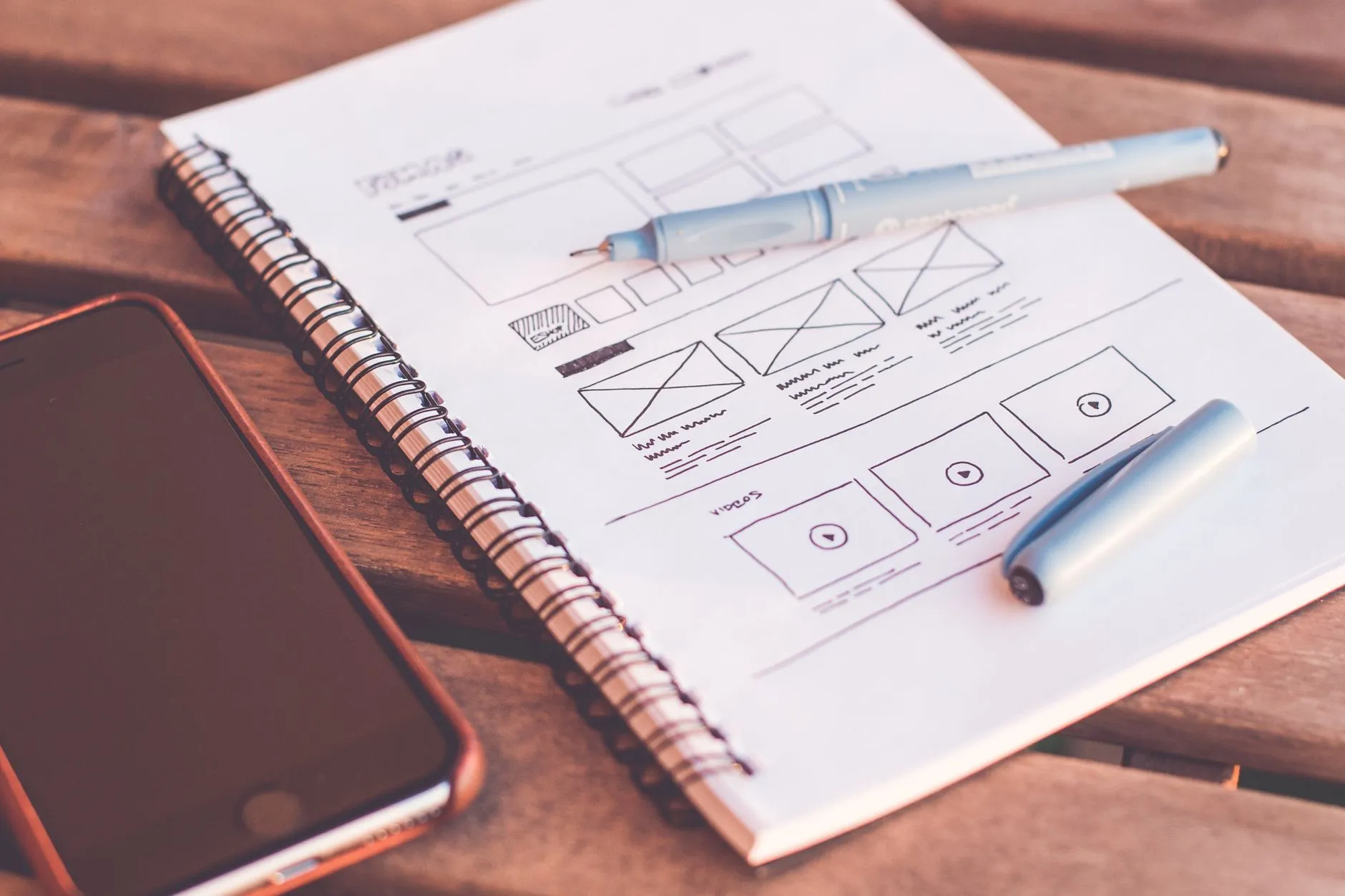
Our wireframing phase focuses on structure and flow before visual design. We use low-fidelity wireframes to validate information architecture and user flows — it’s faster to change a wireframe than a polished mockup. Once flows are validated through user testing, we move to high-fidelity visual design.
The visual design phase applies your brand identity — colours, typography, iconography — to create polished, production-ready interfaces. We design for multiple breakpoints (mobile, tablet, desktop) and ensure WCAG 2.2 AA accessibility compliance. Every component is documented with its states (default, hover, active, disabled, error, loading) to eliminate ambiguity for developers. Adobe reports that companies with strong design practices see 50% higher customer retention and 34% higher market share, while McKinsey found that design-led organisations achieve 32% more revenue growth than their industry peers.
For clients in Haryana and North India, we offer the advantage of a local team that understands regional user behaviour — from language preferences to payment habits to device usage patterns. Our designs are tested on devices and network conditions common in Indian markets, ensuring your product works well for your actual users, not just ideal scenarios. Statista projects the global UX design market will reach $15.4 billion by 2028, as businesses increasingly recognise that user experience directly impacts customer acquisition and retention metrics.
Design handoff is a phase where many projects encounter friction. We eliminate this by preparing comprehensive design specifications that developers can implement without back-and-forth. Every Figma file includes auto-layout components, clearly named layers, variant properties for interactive states, and developer annotations for spacing, typography, and behaviour. Our designers work closely with your development team during implementation to answer questions and review built interfaces for pixel-perfect accuracy.
A well-maintained design system is a long-term asset for any organisation. Beyond the initial project, we help you establish a design system that ensures consistency across all your products — websites, mobile apps, dashboards, and marketing materials. Component libraries are documented with usage guidelines, accessibility requirements, and code snippets. As your product evolves, the design system evolves with it, preventing the visual inconsistency that plagues many growing organisations.
Conversion-focused design is a philosophy that underpins every interface we create. Whether designing a landing page, an e-commerce checkout, or a SaaS dashboard, every element is evaluated against a simple question: does this help the user accomplish their goal? We eliminate unnecessary form fields, reduce cognitive load through clear visual hierarchy, place CTAs where users naturally look, and use micro-interactions to provide feedback and delight. The result is interfaces that not only look good but perform well against your business metrics.
Iterative improvement based on real user data is a principle we apply beyond the initial launch. We set up analytics tracking and session recording tools that capture how users interact with your live product — where they click, where they hesitate, where they drop off. This data feeds into a continuous optimisation cycle: identify friction points, propose design improvements, implement changes, measure impact, and repeat. Over months and years, this iterative approach compounds into significantly better user experiences and higher conversion rates than a single redesign project could achieve.
Design-to-development collaboration is a hallmark of our process. We embed our designers with your development team during the implementation phase, answering questions, reviewing built interfaces, and making real-time adjustments as edge cases emerge during development. This collaborative approach eliminates the common friction where designs are thrown over the wall to developers who then struggle to implement them faithfully. By maintaining designer involvement throughout the build phase, we ensure the final product matches the design vision while accommodating the practical realities of development timelines and technical constraints.
We conduct user interviews, competitor analysis, and usability audits to inform design decisions.
Low-fidelity wireframes map out user flows and content structure.
Interactive prototypes allow for user testing and stakeholder feedback.
High-fidelity mockups with your brand identity, typography, and colour system.
Comprehensive design system with specs, assets, and developer documentation.
Our design system approach uses Figma as the single source of truth, with component libraries exported as code-ready specifications. Every design includes WCAG 2.2 AA compliance documentation, responsive breakpoints for web and mobile, and interactive prototypes for user testing.
We build reusable UI component libraries in Figma with auto-layout, variant properties, and developer handoff specs. Components are documented with states, behaviours, and accessibility requirements.
Every design is validated through usability testing sessions using Maze or Hotjar. We test with real users from your target demographic before handing off to development.
Every engagement includes structured checkpoints and concrete architectural outcomes
See how we deliver measurable results through our ui/ux design projects. Each engagement follows our proven methodology and quality standards to ensure consistent outcomes for our clients.
Design engagements follow a structured three-phase approach: research, design, and validation. Each phase ends with a stakeholder review and sign-off before proceeding.
Phase 1 (Research) delivers personas and journey maps. Phase 2 (Wireframes) delivers validated user flows. Phase 3 (Visual Design) delivers production-ready Figma files and design system.
Every project includes at least one round of moderated usability testing with 5-8 participants. Results are documented with video highlights and actionable recommendations.
Explore complementary services that work alongside our ui/ux design offerings.
High-performance web apps with sub-2.1s load speeds — Next.js, React, Node.js, WordPress, and Shopify development.
Cross-platform and native mobile apps with 4.8★ ratings — Flutter, React Native, Swift, Kotlin.
Brand identities with 85% recall rate — strategy, logo, visual identity, guidelines, and rebranding.
E-commerce stores driving 180% sales growth — Shopify, WooCommerce, Magento, and Medusa.js with sub-1.8s checkout.
Book a session with our engineering team in Hansi Hisar, Haryana. We'll assess your metrics, outline deliverables, and build a free technical implementation plan.
"DigiHaryana's structured delivery process eliminated the guesswork from our digital transformation. Their sprint-based approach kept us aligned from strategy to deployment." — Rohan Mehta, CTO, Lumina Tech
No commitment. No spam. We'll respond within 24 hours.