
DevOps Best Practices for Indian Teams
Practical DevOps best practices for Indian teams — CI/CD pipelines, containerisation, monitoring, observability, and culture building for better software delivery.
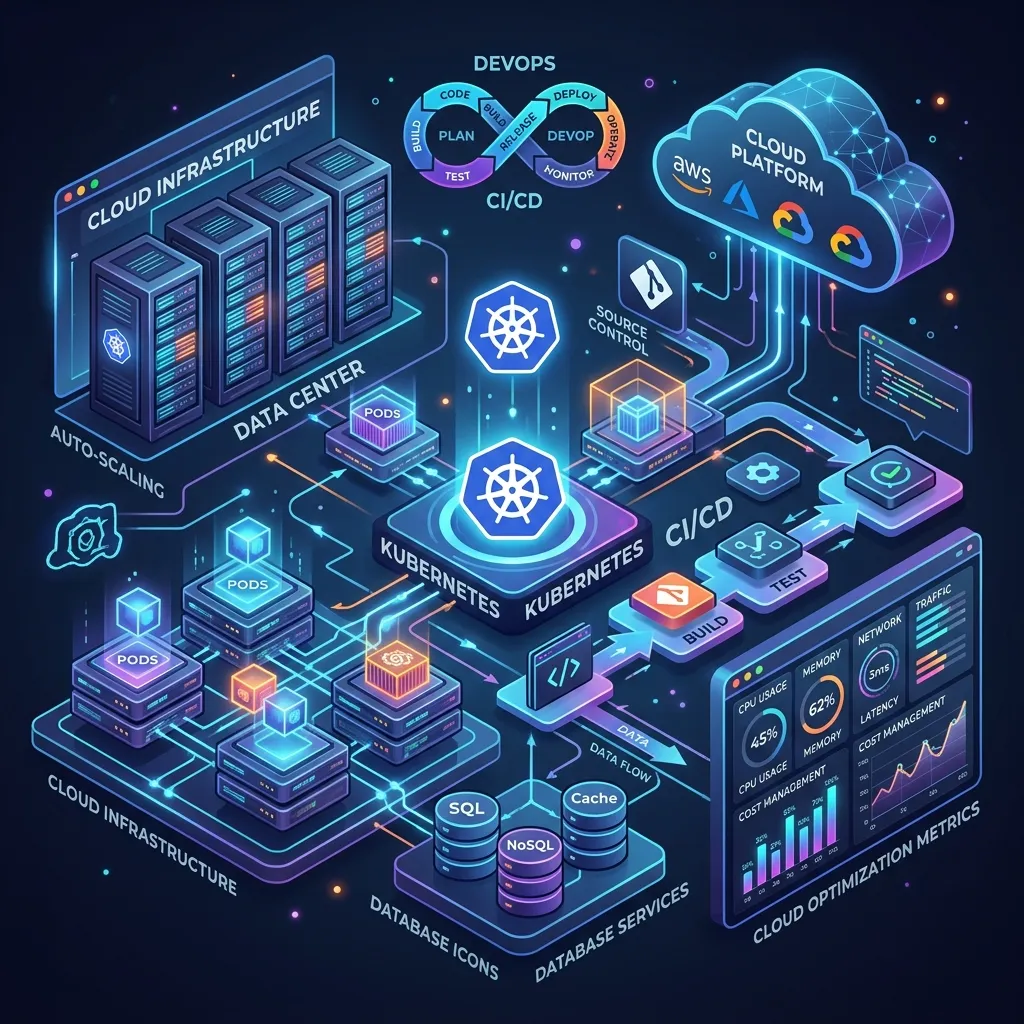
India’s software industry is undergoing a rapid transformation. With over 5 million developers, a booming SaaS ecosystem, and enterprises racing toward cloud-native architectures, DevOps has shifted from a nice-to-have to a core competitive necessity. According to recent industry reports, more than 70% of Indian IT enterprises have adopted DevOps practices in some form, yet many teams still struggle with implementation — inconsistent environments, slow release cycles, and a disconnect between development and operations remain widespread pain points.
For Indian teams navigating tight budgets, distributed workforces, legacy monoliths, and demanding regulatory requirements, a well-executed DevOps strategy is the difference between shipping features in days versus months. This guide covers practical, actionable DevOps best practices tailored specifically for the Indian development ecosystem.
Why DevOps Matters for Indian Companies
DevOps delivers tangible business value that resonates with the realities of the Indian market:
- Speed to market: In a landscape where startups can launch competing products in weeks, CI/CD pipelines enable multiple production deployments per day. Companies like Zerodha and Razorpay have demonstrated that rapid iteration directly correlates with market leadership.
- Cost efficiency: Indian companies operate on thinner margins than their global counterparts. Automation eliminates manual handoffs, reduces downtime, and cuts infrastructure waste. Teams that adopt DevOps report 30-50% reductions in infrastructure costs through better resource utilization.
- Competitive advantage: When a fintech startup in Bangalore can deploy a bug fix in 20 minutes while a legacy bank takes 6 weeks, the competitive gap becomes existential. DevOps levels the playing field.
- Scalability: Indian SaaS products often serve global audiences. DevOps practices — auto-scaling, blue-green deployments, and infrastructure automation — ensure your platform can handle Diwali-season traffic spikes or sudden viral growth without manual intervention.
The bottom line: DevOps is not just an engineering practice. It is a business strategy that directly impacts revenue, customer satisfaction, and operational resilience.
DevOps Culture and Mindset
Tools are only half the equation. The real transformation happens when teams adopt a DevOps mindset that breaks down traditional silos.
Shared responsibility means developers own what they build in production, and operations engineers are included early in the design process. When an on-call alert fires at 2 AM, the person who wrote the code should be part of the response — not throwing tickets over a wall.
Blameless post-mortems are critical. After every incident, the team asks “what went wrong in the process?” rather than “who made the mistake?” This psychological safety encourages people to report issues early instead of hiding them.
Small batch sizes reduce risk. Instead of quarterly releases with hundreds of changes, deploy small increments frequently. Each deployment becomes easier to debug, roll back, and validate.
Automation-first thinking should permeate every workflow. If a developer manually repeats a step more than twice, it should be scripted. Common automation targets include environment provisioning, dependency updates, database migrations, and compliance checks.
Indian teams often face a unique cultural challenge: hierarchical structures where junior developers hesitate to challenge senior architects. DevOps culture demands flat collaboration where anyone can flag a deployment risk regardless of title. Building this culture takes intentional effort — regular retrospectives, open Slack channels for incident discussion, and leaders who model vulnerability.
CI/CD Pipeline Setup
A robust CI/CD pipeline is the backbone of DevOps. Here is how to set one up using popular tools available to Indian teams:
GitHub Actions — Ideal for teams already on GitHub. Free for public repositories and generous free tier for private repos:
name: CI/CD Pipeline
on:
  push:
    branches: [main]
  pull_request:
    branches: [main]

jobs:
  build-and-test:
    runs-on: ubuntu-latest
    steps:
      - uses: actions/checkout@v4
      - name: Set up Node.js
        uses: actions/setup-node@v4
        with:
          node-version: '20'
      - run: npm ci
      - run: npm run lint
      - run: npm test
      - name: Build
        run: npm run build

  deploy:
    needs: build-and-test
    if: github.ref == 'refs/heads/main'
    runs-on: ubuntu-latest
    steps:
      - uses: actions/checkout@v4
      - name: Deploy to production
        run: echo "Deploy step goes here"
GitLab CI — Excellent for teams wanting an all-in-one platform. GitLab offers a self-hosted option that complies with Indian data residency requirements.
Jenkins — The workhorse of enterprise DevOps. Many Indian IT services companies (TCS, Infosys, Wipro) have deep Jenkins expertise. Jenkins is free and extensible, though it requires more maintenance.
Best practices for pipelines:
- Run tests in parallel to reduce feedback time
- Cache dependencies between builds
- Use environment-specific variables for staging vs. production
- Implement automatic rollback on failed deployments
- Integrate SAST tools (SonarQube, Semgrep) directly in the pipeline
Infrastructure as Code
Manual server configuration is a reliability hazard. Infrastructure as Code (IaC) ensures environments are reproducible, version-controlled, and auditable.
Terraform is the most widely adopted IaC tool. It supports AWS Mumbai (ap-south-1), Azure India (centralindia), and Google Cloud Mumbai zones natively:
provider "aws" {
  region = "ap-south-1"
}

resource "aws_instance" "app_server" {
  ami           = "ami-0c55b159cbfafe1f0"
  instance_type = "t3.medium"

  tags = {
    Name        = "app-server-prod"
    Environment = "production"
    Team        = "platform"
  }
}

resource "aws_rds_instance" "database" {
  engine         = "postgres"
  engine_version = "15"
  instance_class = "db.t3.medium"
  multi_az       = true
  storage_encrypted = true

  tags = {
    Name = "app-database-prod"
  }
}
Pulumi lets you write infrastructure in familiar programming languages (TypeScript, Python, Go). This is particularly appealing to Indian teams with strong developer talent who prefer code over DSLs.
Key considerations for Indian cloud deployments:
- Use ap-south-1 (Mumbai) or centralindia regions for lowest latency and data residency compliance
- Multi-AZ deployments for high availability — Indian monsoon seasons bring power fluctuations that affect data center reliability
- Tag all resources meticulously for cost allocation and FinOps visibility
Containerization with Docker
Docker eliminates environment inconsistencies. Every developer, CI runner, and production server runs identical containers.
Multi-stage Dockerfile example (Node.js application):
# Build stage
FROM node:20-alpine AS builder
WORKDIR /app
COPY package*.json ./
RUN npm ci --only=production
COPY . .
RUN npm run build

# Production stage
FROM node:20-alpine
RUN addgroup -g 1001 -S appgroup && \
    adduser -S appuser -u 1001
WORKDIR /app
COPY --from=builder --chown=appuser:appgroup /app/dist ./dist
COPY --from=builder --chown=appuser:appgroup /app/node_modules ./node_modules
USER appuser
EXPOSE 3000
HEALTHCHECK --interval=30s --timeout=3s CMD wget -qO- http://localhost:3000/health || exit 1
CMD ["node", "dist/main.js"]
Best practices:
- Use Alpine-based images to minimize attack surface and image size
- Never run containers as root — create a dedicated non-root user
- Implement health checks so orchestrators can detect unhealthy containers
- Use
.dockerignoreto exclude unnecessary files from the build context - Scan images with Trivy or Docker Scout before pushing to registry
For local development, docker-compose.yml allows developers to spin up the entire stack (app, database, cache, message queue) with a single command.
Kubernetes for Indian Teams
Kubernetes (K8s) is powerful but introduces significant operational complexity. When to use it: you have multiple microservices, need auto-scaling, require zero-downtime deployments, or operate across multiple regions.
When to skip it: you have a small team (under 5 developers), run fewer than three services, or are still validating product-market fit. Start with Docker Compose on a single EC2 instance and migrate when the pain of manual orchestration exceeds the complexity of Kubernetes.
Managed vs. self-hosted:
- Managed (EKS on AWS Mumbai, AKS Azure India, GKE): Recommended for most Indian teams. Eliminates control plane management, provides SLA-backed uptime, and integrates with cloud provider billing. EKS costs approximately ₹15,000/month for the control plane.
- Self-hosted (k3s, kubeadm): Viable for cost-sensitive teams or those with specific compliance requirements. k3s is lightweight and runs well on affordable Indian cloud instances (₹3,000-5,000/month).
Recommended starting stack: Helm for package management, ArgoCD for GitOps-based deployments, and nginx ingress for traffic routing.
Monitoring and Observability
Observability rests on three pillars: metrics, logs, and traces.
Prometheus + Grafana — The gold standard for metrics collection and visualization:
# prometheus.yml
global:
  scrape_interval: 15s

scrape_configs:
  - job_name: 'node-exporter'
    static_configs:
      - targets: ['localhost:9100']

  - job_name: 'app-metrics'
    static_configs:
      - targets: ['app:3000']
Grafana dashboards give teams real-time visibility into request latency, error rates, CPU utilization, and business metrics like transaction volumes.
ELK Stack (Elasticsearch, Logstash, Kibana) for centralized logging. For budget-conscious teams, Loki + Grafana offers a lighter alternative at a fraction of the cost.
Key metrics to monitor:
- RED metrics: Rate, Errors, Duration for every service
- USE metrics: Utilization, Saturation, Errors for infrastructure
- Business metrics: Signups, transactions, payment failures
Set up PagerDuty or open-source alternatives (Grafana OnCall) for alerting. Indian teams operating across time zones should implement follow-the-sun on-call rotations.
Security in DevOps (DevSecOps)
Security cannot be bolted on after deployment. It must be embedded throughout the pipeline.
SAST (Static Application Security Testing): Run SonarQube or Semgrep in CI to catch vulnerabilities like SQL injection, XSS, and hardcoded secrets before code merges.
DAST (Dynamic Application Security Testing): Use OWASP ZAP against staging environments to discover runtime vulnerabilities.
Dependency scanning: Tools like Dependabot, Snyk, or npm audit identify vulnerable packages. Indian startups often inherit transitive vulnerabilities from rapidly added dependencies — automated scanning is non-negotiable.
Secret management: Never commit API keys, database credentials, or certificates to repositories. Use HashiCorp Vault, AWS Secrets Manager, or environment-specific secret injection.
Supply chain security: Sign container images with Cosign, verify provenance with SLSA frameworks, and maintain an SBOM (Software Bill of Materials) for every release.
DevOps for Indian Regulatory Compliance
Indian regulations impose specific requirements that DevOps teams must address:
Data residency (RBI, SEBI, IRDAI): Financial data must remain within Indian borders. Deploy to ap-south-1 (Mumbai) or centralindia regions. Implement network policies that prevent data egress to non-approved regions. Terraform modules should enforce region constraints by default.
RBI cybersecurity guidelines: Mandate encrypted data at rest and in transit, maintain audit logs for 5+ years, and implement multi-factor authentication for all production access. Your CI/CD pipeline should enforce encryption standards and generate compliance evidence automatically.
CERT-In incident reporting: Security incidents must be reported within 6 hours. Your monitoring and alerting stack should detect anomalies in real-time, and runbooks should include CERT-In reporting procedures.
IRDAI and SEBI audit trails: Financial services must maintain immutable logs of all production changes. Git history, CI/CD audit logs, and infrastructure change logs (via Terraform state and CloudTrail) provide the necessary evidence trail.
Automate compliance checks using Open Policy Agent (OPA) or Checkov to scan infrastructure code against regulatory policies before deployment.
Building a DevOps Team in India
Hiring: DevOps engineers in India command ₹8-25 LPA depending on experience. Prioritize candidates who demonstrate hands-on experience with at least two cloud platforms, scripting proficiency (Python, Bash), and strong debugging skills over certifications alone.
Training paths:
- AWS certifications: Solutions Architect Associate and DevOps Professional remain highly valued
- CKA/CKAD: Kubernetes certifications signal operational depth
- Platform-specific: HashiCorp Terraform Associate, GitLab Certified
Team structure for startups (under 20 engineers): One dedicated DevOps/Platform engineer per 8-10 developers. This ratio ensures developers can self-serve infrastructure needs while the platform team maintains guardrails.
Upskilling existing teams: Run internal workshops on CI/CD, Docker, and cloud fundamentals. Pair junior developers with platform engineers on infrastructure tasks. Create a shared runbook repository that documents every operational procedure.
DevOps Toolchain for Indian Startups
A cost-effective, production-ready toolchain:
| Category | Tool | Cost |
|---|---|---|
| Version Control | GitHub | Free (public) / ₹2,800/user/month (Team) |
| CI/CD | GitHub Actions | Free 2,000 min/month |
| Container Registry | GitHub Container Registry | Free for public |
| Cloud | AWS Mumbai / Azure India | Pay-as-you-go |
| IaC | Terraform | Free (OSS) |
| Containers | Docker Desktop | Free for small teams |
| Orchestration | k3s | Free |
| Monitoring | Prometheus + Grafana | Free (OSS) |
| Logging | Loki + Grafana | Free (OSS) |
| Secrets | Infisical (self-hosted) | Free |
| SAST | Semgrep | Free tier available |
| Incident Management | Grafana OnCall | Free (OSS) |
Total infrastructure cost for a small Indian startup: ₹15,000-30,000/month for cloud resources, with most tooling available under open-source licenses.
Conclusion
DevOps is not a destination — it is a continuous journey of improvement. Indian teams have a unique advantage: a massive talent pool, cost-effective infrastructure, and a vibrant community of practitioners sharing knowledge through meetups, conferences like DevConf.in, and open-source contributions.
Start with version control and CI/CD. Add containerization. Build monitoring. Layer in security. Automate compliance. Each step compounds on the previous one, creating an engineering culture that ships faster, breaks less, and scales with your ambitions.
The teams that master DevOps today will define India’s software landscape tomorrow. The best time to start was yesterday. The second-best time is now.
Need expert help? Learn how our DevOps services can help you achieve better results.
Production Infrastructure & DevOps Playbook
Maximizing cloud uptime while minimizing cost requires structured infrastructure-as-code (IaC) templates and continuous monitoring.
Terraform Right-Sizing Template
Use this Terraform code segment to deploy auto-scaling instances optimized for cost-efficiency:
resource "aws_autoscaling_group" "app_asg" {
  desired_capacity    = 2
  max_size            = 10
  min_size            = 2
  vpc_zone_identifier = var.subnet_ids

  launch_template {
    id      = aws_launch_template.app_template.id
    version = "$Latest"
  }
}
Cloud Hardening Checklist
- Network Segregation: Run application databases inside private subnets only.
- Least Privilege: Grant IAM policies specific resources rather than admin access.
- Automated Backups: Configure cross-region snapshot replication with a 30-day retention policy.
- Anomalous Cost Alerts: Trigger PagerDuty alerts if daily cost projections spike by 15%.
Related Articles

Get Professional DevOps / SRE Services
15-minute commit-to-deploy with 5× faster releases — CI/CD, Kubernetes, Terraform, and 24/7 SRE monitoring.
