
How to Choose the Right Tech Stack for Your Startup
Learn how to evaluate and choose the right technology stack for your startup, considering factors like scalability, cost, developer availability, and time to market.
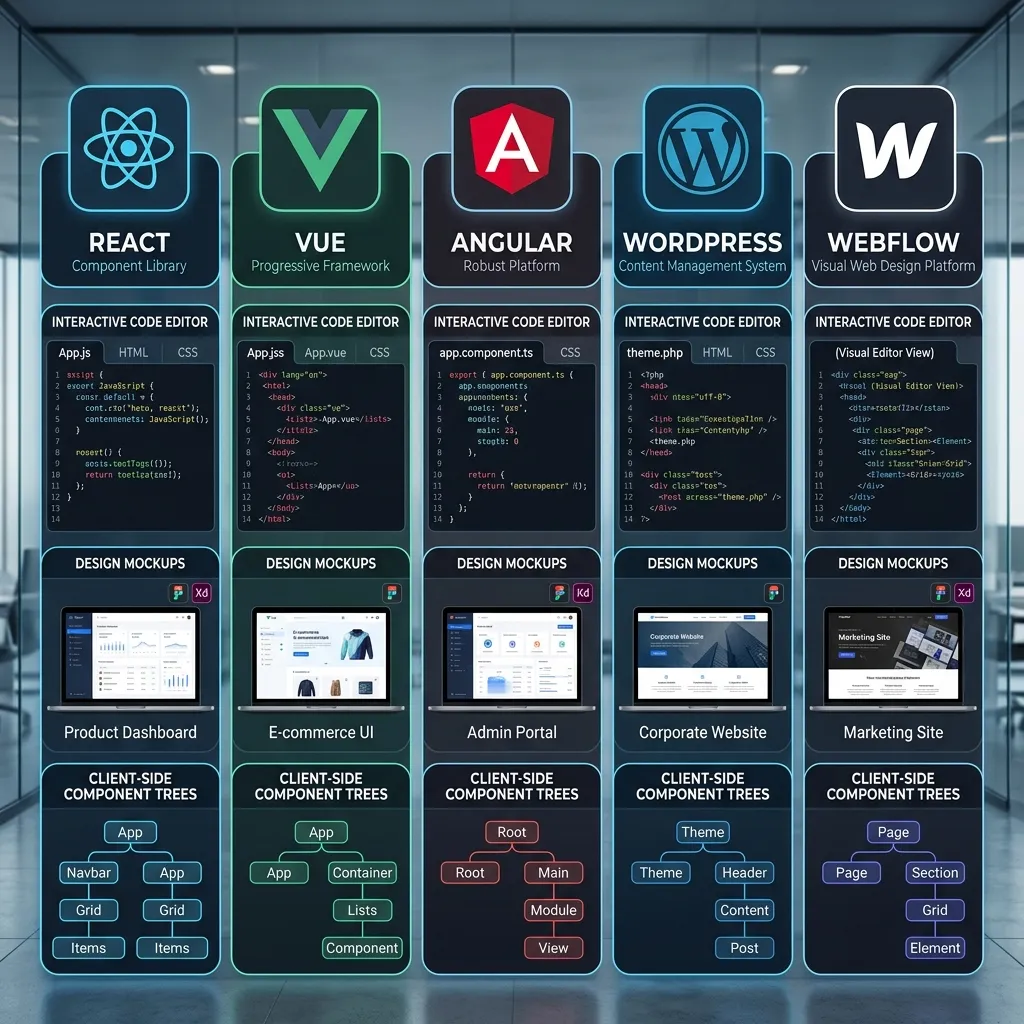
Choosing the right technology stack is one of the most consequential decisions a startup founder will make. The programming languages, frameworks, databases, and infrastructure tools you select form the foundation your product is built on. A well-chosen stack accelerates development, attracts talent, and scales with your growth. A poor choice leads to costly rewrites, hiring struggles, and technical debt that can sink a promising venture before it finds product-market fit.
This guide walks you through a structured framework for evaluating tech stack options, compares the most popular technologies in 2026, and provides recommendations based on your project type, team size, and budget.
Why Your Tech Stack Matters
Your tech stack influences virtually every aspect of your product development lifecycle. Understanding its impact across four critical dimensions helps you make informed decisions.
Performance and User Experience. The stack you choose directly affects page load times, response latency, and how your application handles concurrent users. A React app served through a CDN with a well-optimized API backend delivers a noticeably different experience than a poorly configured monolith. Performance bottlenecks rooted in foundational technology choices are among the hardest and most expensive problems to fix later.
Hiring and Team Building. Developer talent availability varies dramatically across technologies. JavaScript and TypeScript ecosystems offer the largest hiring pools globally and especially in India. Specialized stacks like Elixir or Haskell may offer technical advantages, but finding qualified developers becomes a serious constraint as you scale. Your tech stack determines who you can hire, how quickly, and at what cost.
Scalability and Growth. While premature optimization is a trap, certain stacks handle growth more gracefully than others. Stateless backend services, horizontally scalable databases, and decoupled architectures give you room to grow without rebuilding from scratch. The key is choosing a stack that supports your realistic growth trajectory over the next 18 to 24 months, not one designed for a hypothetical future.
Maintenance and Long-Term Cost. Technology choices compound over time. Frameworks with strong communities, regular updates, and long-term support reduce maintenance burden. Legacy technologies or abandoned libraries create mounting technical debt. Factor in the total cost of ownership, not just the initial development speed.
Key Factors in Choosing a Tech Stack
Before comparing specific technologies, establish your evaluation criteria. Four factors should guide every tech stack decision.
Team Expertise. What technologies does your current team know best? If you are a solo founder who has built three React applications, choosing Vue because it is technically “better” introduces unnecessary risk. Developer productivity drops sharply when working with unfamiliar tools. Build on existing strengths and expand incrementally.
Project Type. A real-time collaborative tool has fundamentally different requirements than a marketing landing page. An e-commerce platform needs robust payment integration and inventory management. A data-intensive analytics dashboard demands efficient querying and visualization libraries. Let your product requirements drive technology selection, not the other way around.
Timeline and Budget. How quickly do you need to launch? What is your runway? Some stacks enable faster prototyping and deployment. Serverless architectures and managed services reduce upfront infrastructure costs but may become expensive at scale. Open-source tools eliminate licensing fees but require more DevOps investment. Balance speed, cost, and flexibility based on your constraints.
Ecosystem and Community. A vibrant ecosystem means more libraries, tutorials, Stack Overflow answers, and third-party integrations. Mature ecosystems reduce the time spent solving solved problems. Evaluate the health of a technology community before committing: check npm download trends, GitHub activity, conference attendance, and the availability of production-grade packages.
Frontend Frameworks Compared
The frontend framework landscape in 2026 offers several strong options, each with distinct strengths.
| Framework | Best For | Learning Curve | Performance | Ecosystem Size |
|---|---|---|---|---|
| React | Most web applications | Moderate | Excellent | Largest |
| Vue | Rapid prototyping, small teams | Gentle | Excellent | Large |
| Angular | Enterprise applications | Steep | Very Good | Large |
| Svelte | Performance-critical apps | Gentle | Superior | Growing |
React remains the industry standard with the largest talent pool and most extensive ecosystem. TypeScript support is mature, and frameworks like Next.js provide production-ready architecture. Choose React when you need maximum flexibility, strong hiring options, and long-term community support.
Vue offers a gentler learning curve and excellent documentation. Vue 3 with Composition API provides a modern development experience. It is ideal for small teams shipping quickly or projects where simplicity matters more than ecosystem breadth.
Angular provides a complete, opinionated framework with built-in dependency injection, routing, and form handling. It excels in large enterprise applications where consistency across teams is critical. The steeper learning curve pays off in large codebases with many contributors.
Svelte compiles to vanilla JavaScript at build time, eliminating the runtime framework overhead. It delivers exceptional performance and smaller bundle sizes. The ecosystem is smaller but growing rapidly. Choose Svelte for performance-sensitive applications where bundle size matters.
Backend Options
Backend technology selection shapes your API design, data processing capabilities, and operational complexity.
| Backend | Best For | Performance | Talent Pool | Maturity |
|---|---|---|---|---|
| Node.js/Express | Real-time apps, APIs | High | Very Large | Mature |
| Python/Django | Data apps, rapid dev | Moderate | Large | Very Mature |
| PHP/Laravel | Web apps, CMS | Moderate | Large | Very Mature |
| Go | High-perf services | Very High | Small | Growing |
Node.js with Express or Fastify excels for real-time applications, REST APIs, and microservices. The JavaScript ecosystem enables full-stack development with a single language. Its non-blocking I/O model handles concurrent connections efficiently. Pair with TypeScript for type safety and better maintainability.
Python with Django or FastAPI is the strongest choice for data-intensive applications, machine learning integration, and rapid prototyping. Django provides batteries-included architecture with ORM, admin, and authentication built in. FastAPI offers modern async performance with automatic API documentation.
PHP with Laravel remains a proven choice for web applications. Laravel’s elegant syntax, built-in features, and mature ecosystem make it particularly effective for content-driven sites, e-commerce platforms, and applications requiring rapid development with reliable hosting options.
Go delivers exceptional performance and concurrency for high-throughput services. Its simplicity and compiled nature make it ideal for infrastructure tools, APIs handling massive request volumes, and performance-critical microservices. The smaller talent pool is a trade-off worth considering.
Database Choices
Your database choice affects data modeling, query performance, and operational complexity.
| Database | Type | Best For | Scalability | Complexity |
|---|---|---|---|---|
| PostgreSQL | Relational | Most applications | High | Moderate |
| MongoDB | Document | Flexible schemas | High | Low-Moderate |
| MySQL | Relational | Traditional apps | Moderate | Low |
| Redis | Key-Value | Caching, sessions | Very High | Low |
PostgreSQL is the default recommendation for most applications in 2026. Its support for JSON, full-text search, geospatial data, and advanced queries makes it versatile enough for nearly any use case. Strong consistency, ACID compliance, and a mature ecosystem make it the safest choice.
MongoDB excels when your data model is fluid, your documents vary in structure, or you are building rapidly iterating features. It works well for content management, real-time analytics, and applications with deeply nested data structures. Be cautious about data consistency requirements.
MySQL offers simplicity and widespread hosting support. It remains a solid choice for straightforward web applications, especially when paired with managed services. For new projects, PostgreSQL’s additional features usually make it the better relational database choice.
Redis serves as an essential caching layer, session store, and message broker alongside your primary database. It is not a primary database for most applications but an invaluable complement for performance optimization.
Tech Stack by Project Type
Different product categories have different technical requirements. Here are proven stack recommendations by project type.
SaaS Applications
- Frontend: Next.js + TypeScript + Tailwind CSS
- Backend: Node.js or Python/FastAPI
- Database: PostgreSQL + Redis
- Infrastructure: Vercel or AWS with managed services
E-Commerce Platforms
- Frontend: Next.js or Nuxt.js
- Backend: Node.js or PHP/Laravel
- Database: PostgreSQL
- Payments: Stripe or Razorpay integration
- Search: Elasticsearch or Algolia
Marketplace Applications
- Frontend: React + TypeScript
- Backend: Node.js with microservices
- Database: PostgreSQL + Redis
- Real-time: WebSockets via Socket.io
- Search: Elasticsearch
Mobile Applications
- Cross-platform: React Native or Flutter
- Backend: Node.js or Python/Django
- Database: PostgreSQL
- Auth: Firebase Auth or Auth0
- Push notifications: Firebase Cloud Messaging
Enterprise Internal Tools
- Frontend: Angular or React
- Backend: Java/Spring Boot or .NET
- Database: PostgreSQL or SQL Server
- Authentication: LDAP/OAuth integration
Tech Stack by Team Size
Your team’s size and composition should influence your technology choices.
Solo Developer. Prioritize technologies you know well and that offer fast development velocity. A Next.js application with Prisma ORM and PostgreSQL deployed on Vercel lets a solo developer build and deploy production applications rapidly. Minimize operational complexity and use managed services wherever possible.
Small Team (2-5 Engineers). Invest in a stack that supports collaboration without excessive overhead. TypeScript across the stack provides consistency. Establish clear architectural patterns early. Consider a monorepo with shared packages for code reuse between frontend and backend.
Enterprise Teams (10+ Engineers). Prioritize technologies that support team autonomy and enforce consistency. Angular or React with strict linting rules, microservices with clear API contracts, and infrastructure-as-code become essential. Invest in CI/CD pipelines, automated testing, and comprehensive documentation.
Indian Startup Tech Stack Recommendations
India’s startup ecosystem has specific considerations that influence optimal tech stack selection.
Talent Availability. JavaScript/TypeScript developers represent the largest and most affordable talent pool in India. React and Node.js dominate the job market. Python developers are also widely available, especially in Bangalore and Hyderabad. Go, Rust, and specialized frameworks have smaller but growing communities.
Cost-Effectiveness. Indian startups should leverage affordable hosting: Vercel’s free tier handles early-stage traffic, Railway and Render offer affordable scaling, and AWS with reserved instances manages larger deployments. Use Supabase or PlanetScale for managed databases to avoid dedicated DevOps hires early.
Recommended Stack.
- Frontend: Next.js + TypeScript + Tailwind CSS
- Backend: Node.js/Express or Python/FastAPI
- Database: PostgreSQL with Supabase or managed AWS RDS
- Hosting: Vercel + Railway
- Authentication: Clerk or Supabase Auth
- Payments: Razorpay
This combination maximizes developer availability, minimizes costs, and provides clear scaling paths as your startup grows.
Common Mistakes in Tech Stack Selection
Avoid these frequent pitfalls that derail startups.
-
Chasing trends without justification. Adopting new technologies because they are popular rather than because they solve your specific problems.
-
Over-engineering from day one. Building microservices, Kubernetes clusters, and complex infrastructure before you have a product that users want.
-
Ignoring developer experience. Choosing tools that are painful to work with reduces productivity and makes hiring harder.
-
Underestimating maintenance costs. Factoring in only initial development time and ignoring ongoing updates, security patches, and refactoring.
-
Optimizing for scale you do not have. Building for millions of users when you have hundreds wastes time and adds complexity.
-
Relying on a single developer’s preferences. Stack choices should align with team capabilities and hiring needs, not one person’s comfort zone.
-
Skipping proof of concept. Committing to a stack without building a small prototype to validate that it works for your use case.
-
Neglecting the hiring market. Choosing a niche technology that makes future hiring expensive or impossible in your region.
When to Switch Tech Stacks
Sometimes changing your tech stack is the right call. Here are signals that migration may be necessary.
Technical constraints that block growth. Your current stack cannot handle your traffic, data volume, or feature requirements despite optimization efforts.
Hiring has become prohibitively difficult. You cannot find qualified developers, or recruitment costs have become unsustainable relative to your budget.
Maintenance costs exceed development value. You spend more time fighting the framework than building features.
Security vulnerabilities. Your stack has known security issues with no available patches or upgrades.
Before migrating, evaluate the full cost including developer retraining, data migration, testing, and the risk of introducing bugs. Consider a gradual migration strategy using strangler fig patterns rather than a complete rewrite.
Conclusion
Choosing the right tech stack is not about finding the objectively best technology. It is about selecting the combination that best fits your product requirements, team capabilities, timeline, and budget. Start with proven technologies, build your MVP quickly, gather user feedback, and evolve your stack as your startup grows.
The most important thing is to ship your product. A perfect tech stack with no users is worthless. A good-enough stack with paying customers gives you the resources to optimize everything later. Focus on solving real problems for real users, and let your technology choices serve that mission.
Ready to build your startup’s technical foundation? Contact DigiHaryana for a personalized tech stack consultation tailored to your specific product, team, and growth goals.
Need expert help? Learn how our IT consulting services can help you achieve better results.
Enterprise Coding Standards & Architecture
Building highly scalable SaaS applications, frontend interfaces, or content management workflows requires modern design patterns and code quality.
Decoupled Content Retrieval Pattern
Below is a clean TypeScript example of dynamic API data fetching in a headless CMS setup:
interface Article {
  id: string;
  title: string;
  slug: string;
}

export async function fetchContent(endpoint: string): Promise<Article[]> {
  try {
    const res = await fetch(endpoint, {
      headers: { 'Authorization': `Bearer ${process.env.CMS_API_KEY}` },
      next: { revalidate: 3600 } // cache for 1 hour
    });
    if (!res.ok) throw new Error('Failed to fetch content from headless repository');
    return await res.json();
  } catch (error) {
    console.error('CMS Fetch Error:', error);
    return [];
  }
}
Technical Review Checklist
- Component Isolation: Keep logic separate from presentation layers.
- State Management: Use lightweight libraries (Zustand, Nanostores) over heavy frameworks.
- Bundle Optimization: Tree-shake unused packages and compress media assets.
- Semantic HTML: Maintain 100% lighthouse accessibility scores.
Related Articles

Clinic & Hospital Website Development in Hisar — Build Your Practice Online
Need a clinic or hospital website in Hisar? We build medical websites with online booking, patient portals, and telemedicine integration. Starting at ₹25,000. Get a free consultation today.

How to Improve Core Web Vitals in 2026: Complete Guide with Actionable Fixes
Learn how to improve Core Web Vitals (LCP, INP, CLS) for better Google rankings and user experience. Complete guide with technical fixes, tools, and best practices for 2026.

E-Commerce Website Development in Hisar — Build Your Online Store
Need an e-commerce website in Hisar? We build Shopify and WooCommerce stores for Hisar retail businesses. Online stores starting at ₹50,000. Get a free consultation today.
Get Professional IT Consulting Services
Reduce IT spend waste by 25% — vendor-neutral strategy, digital transformation, and 3-5 year technology roadmaps.
