
Email Marketing Best Practices 2026: Complete Guide
The latest email marketing best practices for 2026, covering AI-powered personalization, deliverability, automation workflows, and GDPR compliance.
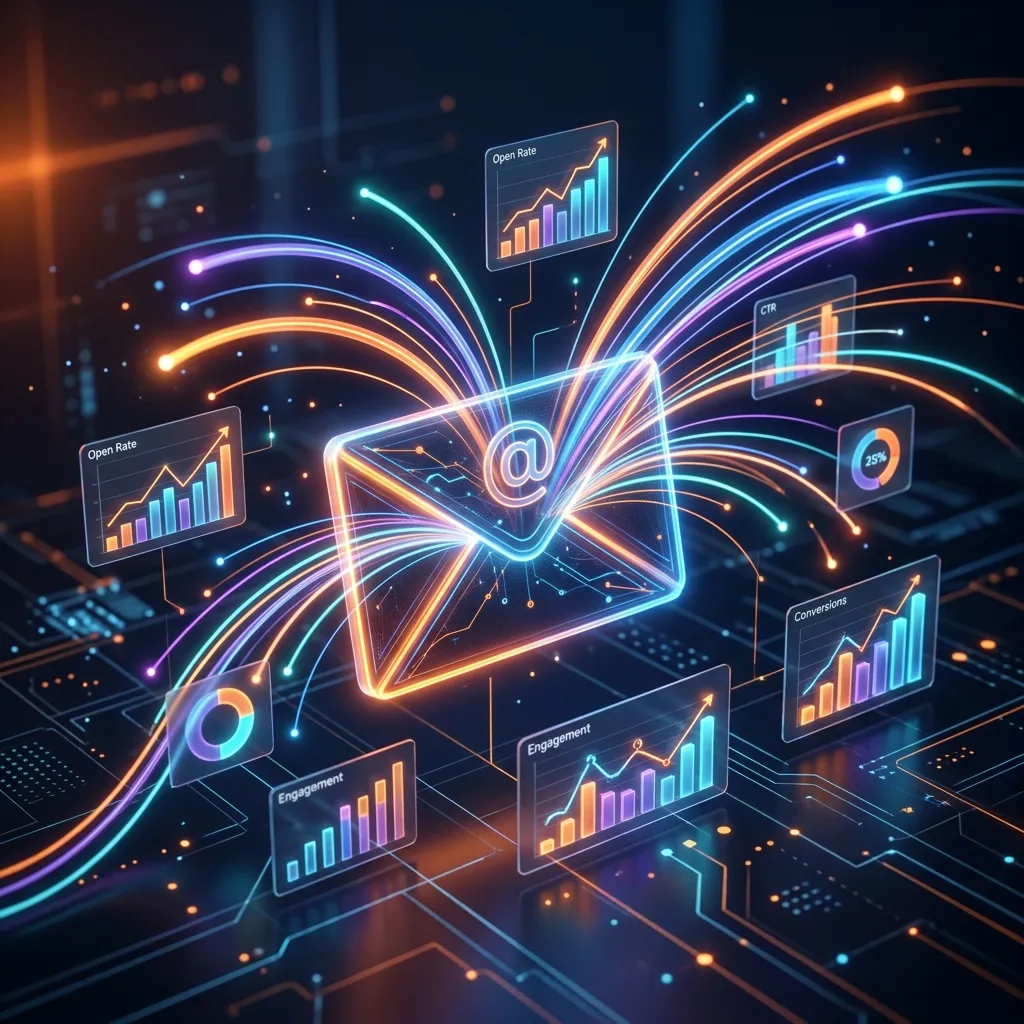
Email marketing remains the single most effective digital marketing channel in 2026 — returning ₹36 for every ₹1 spent. But the landscape has shifted dramatically. AI-powered spam filters are ruthlessly pruning inboxes, privacy regulations like India’s DPDPA are tightening consent requirements, and subscribers expect hyper-relevant content or they unsubscribe without a second thought. If your email program is still running on batch-and-blast tactics from 2020, you are leaving money on the table.
This guide walks you through every critical aspect of email marketing in 2026: from building a high-quality subscriber list to automating intelligent drip campaigns, from writing subject lines that get opened to ensuring your emails land in the primary inbox — not spam. Whether you are a solopreneur in Gurugram or a marketing lead at a Mumbai SaaS startup, these best practices will help you turn your email list into a predictable revenue engine.
Why Email Marketing Still Works
Social media algorithms change constantly. Paid ads get more expensive every quarter. Email is the one channel you truly own.
- Unmatched ROI: ₹36 returned for every ₹1 spent — higher than SEO (₹22), paid search (₹20), and social media (₹12). Indian e-commerce brands report email driving up to 30% of online revenue.
- Direct access to your audience: Unlike social followers, email subscribers gave you explicit permission. No algorithm decides whether your content gets seen.
- Ownership and portability: If your Instagram gets restricted or Facebook reach drops, you lose everything. Your email list is yours — exportable and platform-independent.
- Higher engagement: Average email open rates hover at 21-25%, compared to organic social reach on Facebook (5.2%) or Instagram (6.4%).
- Higher purchase intent: Email subscribers are warmer leads than social scrollers. They convert at 3-5x the rate of social media traffic.
Email is not dead. It is the backbone of profitable digital marketing — and in 2026, it rewards marketers who play the long game.
Building Your Email List
Quality beats quantity every time. Here is how to build a list that generates revenue:
Lead magnets that convert:
- Checklists and cheat sheets (e.g., “10-Point Email Marketing Audit Checklist”)
- Templates and swipe files (e.g., “50 High-Converting Subject Lines for Indian Brands”)
- Free tools or calculators
- Mini-courses delivered over 5-7 emails
- Exclusive video training or webinar recordings
Opt-in forms that work:
- Place signup forms above the fold on your homepage
- Use exit-intent popups triggered when a visitor is about to leave
- Add inline forms within blog posts (converts 2-3x better than sidebar forms)
- Use two-step opt-ins — they convert 30% more than single-step forms
- Keep forms short: name and email only. Every extra field reduces conversions by 10-15%
Landing pages: Create dedicated pages for each lead magnet. A focused landing page with clear headline and benefit-driven copy converts 5-15% of visitors — compared to 1-2% for a generic homepage.
Leverage touchpoints: Add signup links to social media bios, blog post CTAs, email signatures, events, and webinars.
Email Segmentation Strategies
Sending the same email to every subscriber is the fastest way to destroy your open rates.
Behavioral segmentation:
- Purchase history: First-time buyers, repeat customers, high spenders, and lapsed buyers each need different messaging
- Website activity: Visitors who checked your pricing page but did not buy should receive different content than blog-only readers
- Email engagement: Active openers, occasional openers, and non-openers require different re-engagement strategies
- Cart abandonment: Reminder at 1-2 hours, second email at 24 hours, final nudge with incentive at 48 hours
Demographic segmentation:
- Location-based: Send region-specific offers, festival greetings (Diwali, Eid, Pongal), and language-appropriate content
- Industry and job role: B2B brands should segment by company size, industry, and decision-maker role
Engagement-based segmentation:
- Highly engaged (opened in last 7 days): Send your best content and offers
- Moderately engaged (opened in last 30 days): Mix value content and promotions
- Low engagement (no opens in 60+ days): Trigger re-engagement before removing
- New subscribers (joined in last 14 days): Send your welcome series immediately
Rule of thumb: every email should be relevant to at least 80% of recipients in that segment.
Crafting Subject Lines That Get Opened
Your subject line has 2-3 seconds to grab attention. In 2026, email clients use AI to preview and rank emails, making this more critical than ever.
Proven formulas:
- Curiosity gap: “The one email mistake costing you ₹50,000/month”
- Number-driven: “7 subject line formulas that increased opens by 42%”
- Urgency: “Last chance: Webinar starts in 3 hours”
- Personalization: “[Name], your custom SEO report is ready”
- Question: “Are you making this email marketing mistake?”
- Social proof: “Join 12,000+ marketers who read this weekly”
What to avoid:
- ALL CAPS subject lines (triggers spam filters)
- Excessive punctuation (!!!, ???)
- Spam trigger words used carelessly: “free,” “guarantee,” “act now”
- Clickbait that does not match email content (destroys trust)
- Subject lines longer than 40 characters (cut off on mobile)
A/B testing: Test one variable at a time — length, personalization, tone, or emoji usage. Send each variant to 20% of your list, wait 2-4 hours, then send the winner to the remaining 60%.
Email Content Best Practices
Getting the open is only half the battle. The content must deliver value and drive action.
Copy that converts:
- Lead with the benefit, not the feature. “Save 3 hours every week” beats “Our new automation feature”
- Write at a 6th-grade reading level. Short sentences. One idea per paragraph
- Use “you” language — the reader should feel you are talking directly to them
- Include a single, clear CTA per email. Multiple CTAs compete and reduce conversions
- Place your primary CTA above the fold and repeat it at the bottom for longer emails
Design principles:
- Single-column layout for mobile responsiveness
- Font size at least 14px for body text, 20px+ for headlines
- CTA buttons: minimum 44×44 pixels, contrasting color
- White space is your friend — avoid walls of text
- Keep total email width under 600px
Preheader text: This snippet appears next to your subject line in the inbox. Do not repeat the subject line — expand on it. For example, Subject: “Your weekly marketing roundup” / Preheader: “3 strategies you can implement today.”
Automation and Drip Campaigns
Manual email marketing does not scale. Automation delivers the right message at the right time without constant effort.
Welcome series (3-5 emails):
- Email 1 (immediately): Deliver the lead magnet, set expectations
- Email 2 (day 2): Share your brand story and core values
- Email 3 (day 4): Provide a valuable resource or case study
- Email 4 (day 7): Introduce your product/service with a soft CTA
- Email 5 (day 10): Offer a limited-time incentive to convert
A well-crafted welcome series converts 5-10% of new subscribers into paying customers.
Nurture sequences:
- Educational drip: Build trust and position yourself as an authority over 2-4 weeks
- Product onboarding: Guide new users through features step-by-step
- Content digest: Weekly or biweekly curated content for ongoing value
Re-engagement campaigns: Trigger when a subscriber has not opened an email in 60-90 days. Email 1: “We miss you.” Email 2: Ask for feedback. Email 3: Offer an incentive. If no engagement after 3 emails, remove them to protect deliverability.
Cart abandonment sequences:
- 1-2 hours: Simple reminder with product image
- 24 hours: Address common objections
- 48 hours: Add urgency (low stock, limited-time discount)
Email Deliverability
Your email is worthless if it lands in spam. Deliverability is the technical backbone of email marketing.
Authentication records (non-negotiable in 2026):
- SPF: Tells receiving servers which IPs are authorized to send on your behalf
- DKIM: Adds a digital signature to verify email integrity
- DMARC: Sets policy for handling emails that fail SPF/DKIM checks
Set up all three in your DNS. Gmail, Outlook, and Yahoo now require DMARC compliance for bulk senders.
List hygiene:
- Remove hard bounces immediately
- Run re-engagement campaigns every 90 days for inactive subscribers
- Never purchase email lists — they destroy your sender reputation
- Use double opt-in to verify every new subscriber
- Keep spam complaint rate below 0.1%
Sending practices:
- Warm up new domains and IPs gradually over 2-4 weeks
- Send consistently — avoid sudden volume spikes
- Use a dedicated sending domain for marketing emails
- Monitor blacklists with MXToolbox and track reputation via Gmail Postmaster Tools
Analytics and KPIs
What gets measured gets improved. Track these metrics weekly.
Core metrics:
- Open rate: Average 21-25%. Below 15% signals subject line or reputation issues
- Click-through rate (CTR): Average 2-4%. Below 1% indicates content or relevance problems
- Conversion rate: Percentage who complete the desired action (purchase, signup, download)
- Unsubscribe rate: Should stay below 0.5% per campaign
- Bounce rate: Keep below 2%
Advanced metrics:
- Revenue per email: Total revenue divided by emails sent — the ultimate ROI metric
- List growth rate: Gaining subscribers faster than losing them?
- Email ROI: (Revenue - Cost) / Cost × 100
- Forward/share rate: Indicates content quality and word-of-mouth potential
Use UTM parameters on every link to attribute revenue accurately in Google Analytics 4.
Email Marketing Tools Comparison
- Mailchimp: Best for beginners. Free plan up to 500 contacts. Drag-and-drop editor, basic automation. Paid plans from ₹800/month.
- Brevo (formerly Sendinblue): Best for budget-conscious Indian businesses. Free plan with unlimited contacts. WhatsApp + SMS + email in one platform. Paid plans from ₹600/month.
- ConvertKit: Best for creators and course sellers. Free plan up to 1,000 contacts. Paid plans from ₹1,500/month. Excellent tagging system.
- ActiveCampaign: Best for advanced automation. 500+ pre-built recipes, CRM integration, lead scoring. Paid plans from ₹1,800/month.
For most Indian SMBs starting out, Brevo offers the best value. As you scale, ActiveCampaign is the upgrade path.
Email Marketing for Indian Businesses
The Indian market has unique considerations that global guides overlook:
DPDPA compliance: India’s Digital Personal Data Protection Act 2023 requires explicit consent before collecting email addresses. Every email must include a working unsubscribe link. Opt-out requests must be processed within 72 hours. Non-compliance can result in penalties up to ₹250 crore.
Pricing: Most international tools price in USD, adding 8-10% to costs. Brevo and Zoho Campaigns offer INR billing. Factor in 18% GST when budgeting.
Localization:
- Use regional language subject lines for higher open rates (Hindi, Tamil, Telugu, Bengali)
- Align campaigns with Indian festivals (Diwali, Holi, Navratri, Eid, Onam)
- Integrate India-specific payment gateways (Razorpay, PayU) in email CTAs
- Schedule sends for 9-11 AM or 7-9 PM IST for optimal engagement
10-Point Email Marketing Checklist
Use this before every campaign:
- Authenticate your domain with SPF, DKIM, and DMARC
- Clean your list — remove bounces, unsubscribes, and 90-day inactives
- Segment your audience — send to a targeted segment, not your entire list
- Write a compelling subject line — under 40 characters, curiosity-driven
- Optimize preheader text — expand on the subject line, do not repeat it
- Design mobile-first — single column, 14px+ fonts, 44px+ CTA buttons
- Include one clear CTA — above the fold and repeated at the bottom
- Add unsubscribe link — visible, one-click, required by DPDPA
- Test before sending — check across Gmail, Outlook, Apple Mail, and mobile
- Track and optimize — use UTM parameters, review metrics weekly, A/B test
Conclusion
Email marketing in 2026 rewards precision over volume. The brands winning the inbox are investing in quality lists, intelligent segmentation, automated workflows, and relentless optimization. Start with the fundamentals: build a clean list, segment aggressively, write subject lines that earn opens, deliver genuine value, and measure everything.
The ₹36-for-every-₹1 ROI is not theoretical — it is what disciplined email marketers in India are achieving right now. Your email list is your most valuable marketing asset. Treat it that way.
Ready to transform your email marketing? Start by auditing your current program against the 10-point checklist above. Identify your three biggest gaps and fix them this week. Then set up your first automated sequence — even a simple welcome series can drive measurable results within 30 days.
If you need help building an email marketing strategy tailored to your business, contact the DigiHaryana team — we have helped Indian businesses across industries turn their email lists into consistent revenue engines.
Need expert help? Learn how our email marketing services can help you achieve better results.
High-Performance Marketing ROI Framework
To systematically scale organic traffic and paid search advertising, marketing teams must audit metrics using clear, mathematically sound formulas.
Core Marketing Performance Formulas
| Metric | Formula | Target Benchmark |
|---|---|---|
| CTR (Click-Through Rate) | (Clicks / Impressions) * 100 | > 3.5% |
| CPA (Cost Per Acquisition) | Total Ad Spend / Total Conversions | Industry Average |
| ROAS (Return on Ad Spend) | Revenue from Ads / Total Ad Spend | > 4.0x |
| Conversion Rate | (Conversions / Visitors) * 100 | > 2.5% |
Multi-Channel Execution Strategy
- Audience Mapping: Build custom remarketing lists using site engagement cookies.
- A/B Testing: Run multiple variations of headlines and call-to-actions weekly.
- Lead Capture: Place a prominent, sticky contact form on top landing pages.
- Attribution Modeling: Utilize multi-touch attribution to trace customer journeys.
Related Articles
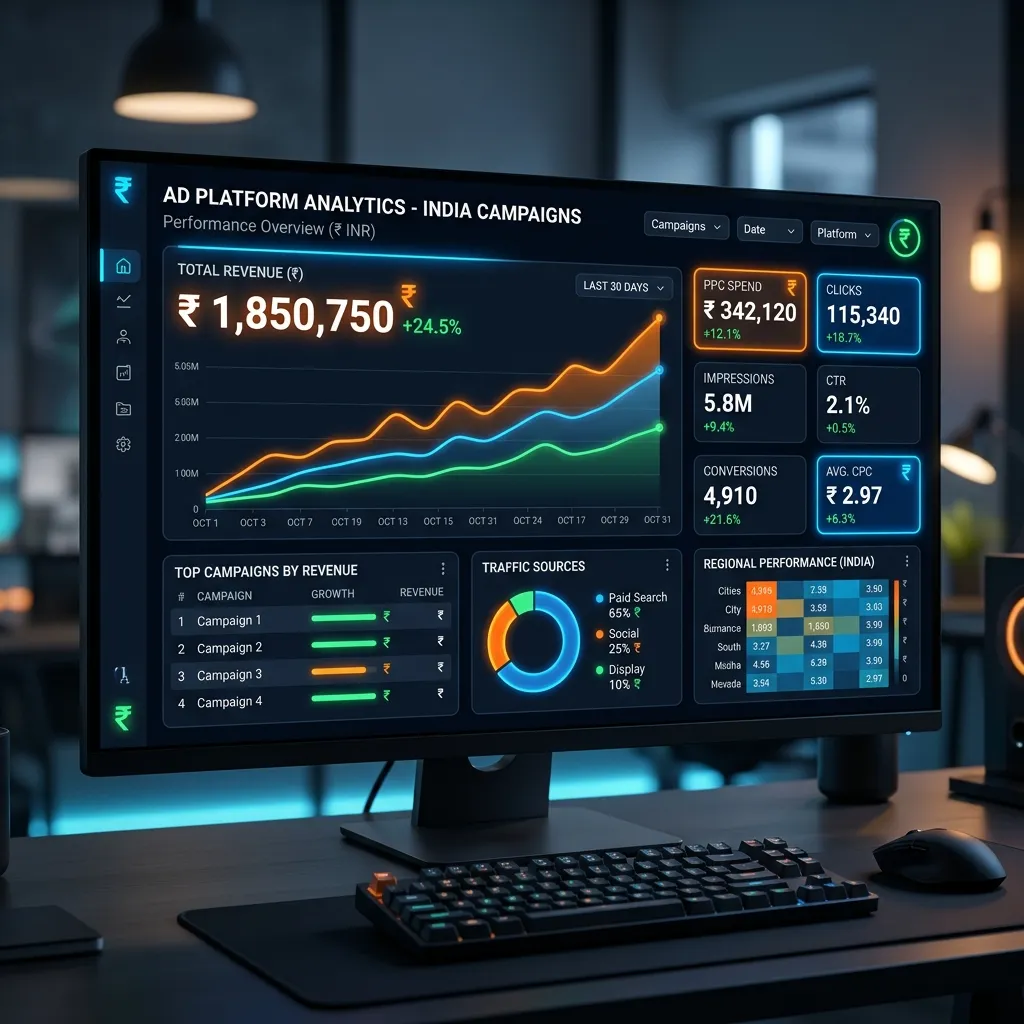
Google Ads & PPC Management Services in Hisar — Get More Customers Fast
Need Google Ads management in Hisar? We run profitable PPC campaigns that generate leads within 24 hours. Google Ads, Facebook Ads & LinkedIn Ads. Starting at ₹8,000/month.

Social Media Marketing Packages in Hisar — Grow Your Business on Instagram, Facebook & LinkedIn
Social media marketing packages for Hisar businesses starting at ₹5,000/month. Instagram, Facebook, and LinkedIn management with content creation, posting, and paid ads.
LinkedIn Marketing for B2B Businesses in India: Complete Strategy Guide 2026
Learn how to generate B2B leads on LinkedIn in 2026. Complete guide covering organic content strategy, LinkedIn Ads, profile optimization, and proven tactics for Indian businesses.
Get Professional Email Marketing Services
Email campaigns with 24.5% open rates — automation, segmentation, newsletter design, and list growth.
