
How to Rank on Google AI Overviews in 2026
A step-by-step guide to getting your content featured in Google AI Overviews, including structured data, content formatting, and authority building strategies.

Quick answer: To rank in Google AI Overviews, create content that directly answers user questions with clear, extractable passages. Use H2/H3 headings that match natural query phrasing, implement FAQPage and Article schema markup, cite authoritative sources for every statistic, and demonstrate E-E-A-T through expert author bios and fresh content. According to Google, pages with strong topical authority and structured data are significantly more likely to be featured in AI Overviews.
Google AI Overviews are no longer a novelty — they are the new front door to search. In 2026, over 40% of Google searches trigger an AI-generated summary at the top of the results page, pulling snippets from multiple websites into a single synthesized answer. If your content is not being cited in those overviews, you are invisible to a growing share of search traffic.
The good news: ranking in AI Overviews follows identifiable patterns, and with the right strategy you can systematically position your content to be selected. This guide breaks down exactly how to do it.
What Are Google AI Overviews?
Google AI Overviews are AI-generated summaries that appear at the top of search result pages for qualifying queries. They synthesize information from multiple authoritative sources, presenting a consolidated answer that directly addresses the user’s question. Unlike featured snippets, which pull a single block of text from one page, AI Overviews aggregate insights across several sources and often include follow-up questions.
Google’s Search Generative Experience (SGE) engine powers these overviews, using large language models to understand questions, evaluate source quality, and generate coherent summaries. The sources cited are not random — Google’s ranking systems evaluate each candidate page against criteria like relevance, expertise, freshness, and structured presentation.
For businesses, getting featured in AI Overviews means capturing attention at the moment of intent, before users even scroll to traditional organic results.
How AI Overviews Select Sources
Google does not reveal its exact selection algorithm, but extensive testing reveals consistent patterns. The primary factors include:
- Relevance to the query — Your content must directly answer the specific question. Pages that vaguely touch on a topic are passed over for pages that provide clear, focused answers.
- Domain and topical authority — Google evaluates whether your site has demonstrated consistent expertise. A one-off article on a health topic from a marketing blog will lose to a dedicated health resource.
- Content freshness — AI Overviews heavily favor recently published or updated content. An article from 2023 is unlikely to be cited over a comparable piece from 2025.
- Structured content format — Pages with clear headings, concise paragraphs, bullet points, and defined answer blocks are easier for the AI to parse and extract from.
- Backlink quality — Pages with strong, relevant backlinks continue to outperform in AI Overview selection.
- Authoritativeness signals — Author bylines, publication dates, clear citations, and transparent sourcing all increase the likelihood of being selected.
Step-by-Step: How to Rank in AI Overviews
1. Identify AI Overview Triggers
Audit your target queries using tools like SEMrush, Ahrefs, or Google Search Console to identify which queries currently trigger AI Overviews. Prioritize queries where you already rank on page one — these are your lowest-hanging fruit.
2. Study the Existing Overview
When a query triggers an AI Overview, note which sources are cited, what angle the overview takes, and which questions it answers. This tells you exactly what Google considers authoritative on that topic. Use this as a benchmark — not to copy, but to understand the standard.
3. Create a Dedicated Answer Page
Build a page specifically designed to answer the trigger question. Place the answer in the first 100–150 words, then expand with supporting details, context, and examples. The structure should be: direct answer first, depth second.
4. Use the Question as a Heading
Format the target question as an H2 or H3. Follow it immediately with a concise, definitive answer in a single paragraph. Google’s AI extracts these formatted question-answer blocks directly.
5. Add Supporting Evidence
Below your direct answer, provide statistics, case studies, expert quotes, or data points. Instead of saying “content marketing is effective,” say “Content marketing generates 3x more leads than traditional advertising while costing 62% less, according to DemandMetric.” Specificity wins.
6. Implement Structured Data
Add FAQPage schema for question-answer pairs, Article schema with author and date fields, and HowTo schema for step-by-step processes. Validate all markup with Google’s Rich Results Test. This helps Google’s systems parse your content and increases citation probability.
7. Build Internal Links
Link to your AI Overview target page from other relevant pages on your site using descriptive anchor text. For example, link from articles on email marketing best practices to your page answering “how to improve email open rates.” This builds topical signals around the page.
8. Update Content Regularly
Refresh your target pages every 60–90 days. Update statistics, add new examples, and expand thin sections. Freshness is a significant ranking signal for AI Overviews, especially in technology, marketing, and current events.
9. Earn Relevant Backlinks
Focus on backlinks from sites within your niche. Guest posts, original research, and data-driven content attract natural links. One backlink from a respected industry publication outweighs ten from generic directories.
10. Monitor and Iterate
Track AI Overview appearances using Google Search Console and third-party tools. When a page is being cited, double down on that angle. When it is not, analyze competing sources and adjust accordingly.
Content Formatting for AI Overviews
How you present your content matters as much as what you say. Google’s AI parses content in discrete chunks, and well-organized pages get extracted more reliably:
- Lead with the answer. Start with a clear, direct statement in the first paragraph. Do not bury it under a long introduction.
- Use short paragraphs. Limit paragraphs to 2–3 sentences. Dense blocks are harder for the AI to parse.
- Leverage bullet points and lists. Lists are inherently structured and easy for the AI to reference.
- Define terms inline. When introducing technical concepts, define them immediately: “Topic clusters are groups of related content pieces that interlink to demonstrate topical authority.”
- Add visual hierarchy with headings. Use H2s for main sections, H3s for sub-sections, and H4s for granular breakdowns.
Example of good AI Overview formatting:
What is AEO Optimization?
AEO optimization (Answer Engine Optimization) is the practice of structuring web content so it gets cited by AI-powered search engines like Google AI Overviews, ChatGPT, and Perplexity. Unlike traditional SEO, which targets blue links, AEO targets synthesized answers.
Key components include:
- Structured data markup to help AI systems parse content
- Direct answer formatting with concise responses
- Topic authority through comprehensive coverage
- Freshness signals through regular updates
Structured Data That Helps
Structured data is the technical backbone of AI Overview optimization. The most impactful schema types are:
FAQPage Schema — Use for pages with multiple question-answer pairs. Each question and its answer should be marked up as a separate entity. This is ideal for blog posts, product pages, and support articles.
Article Schema — Use on all blog posts and editorial content. Include author, datePublished, dateModified, publisher, and image fields. This establishes content ownership and freshness — two critical AI Overview signals.
HowTo Schema — For step-by-step guides and tutorials, HowTo schema clearly delineates each step, helping Google’s AI understand sequential processes and present them accurately.
Pro tip: Combine schema types on a single page. A how-to article can have both HowTo and FAQPage schema if it includes a FAQ section. More structured data signals mean more parsing clarity for Google.
Building Topic Authority
AI Overviews evaluate your site’s overall authority on a topic, not just individual pages. A single article on “email marketing tips” will struggle against a site with 50 interconnected articles covering every aspect of email marketing. Here is how to build that authority:
- Create topic clusters. Build 10–20 supporting articles around your core topic. If your core topic is “local SEO,” create cluster content on Google Business Profile optimization, local citations, reviews management, and location-specific landing pages.
- Interlink strategically. Every cluster article should link back to the main pillar page and to related cluster articles using descriptive anchor text. This creates a web of topical signals.
- Cover topics comprehensively. Go beyond surface-level content. Cover sub-topics, edge cases, common mistakes, advanced techniques, and real examples. The more comprehensive your coverage, the more likely Google will recognize your site as a definitive resource.
- Establish author credibility. Include author bios with relevant credentials and link to author profiles. Google’s AI evaluates authorship signals when determining source quality.
Technical SEO for AI Overviews
Even perfectly written content can be overlooked if technical issues prevent Google from properly crawling and parsing your pages:
- Core Web Vitals. Target LCP under 2.5 seconds, INP under 200 milliseconds, and CLS under 0.1. Google uses page experience signals as a ranking factor.
- Mobile optimization. Over 60% of Google searches happen on mobile. Your content must render perfectly — readable without zooming, with touch-friendly navigation.
- Crawlability and indexability. Verify your target pages are crawlable and indexed. Check robots.txt, ensure no critical pages are blocked, and submit your sitemap to Google Search Console.
- Page speed. Compress images, minify CSS and JavaScript, use browser caching, and consider a CDN. Faster pages are prioritized by Google’s systems.
- HTTPS security. Ensure your site runs on HTTPS. This is a confirmed ranking signal, and Google will not cite HTTP pages in AI Overviews.
- Clean HTML structure. Use semantic HTML elements (article, section, nav, header, footer) rather than generic divs. Clean markup makes parsing easier.
Real Examples of AI Overview Optimization
Digital Marketing Agency Case Study
A digital marketing agency created a comprehensive guide answering “how to choose the right digital marketing agency for your business.” They structured the page with the question as an H2, provided a direct answer in the first 150 words, added a comparison table, implemented FAQPage schema with 8 related questions, and built 12 internal links. Within 45 days, the page was cited in the AI Overview, resulting in a 340% increase in organic impressions.
SaaS Product Comparison
A B2B SaaS company created a comparison page answering “what is the best project management tool for remote teams.” They included a feature comparison table, user testimonials with specific metrics, and pricing breakdowns. The page combined Article and FAQPage schema, was updated monthly, and earned backlinks from 8 industry blogs. Within 60 days, it became a primary AI Overview source, driving a 215% increase in qualified organic traffic.
Health Blog Example
A health blog targeting “benefits of intermittent fasting for women” created a 3,000-word guide with citations to peer-reviewed studies, authored by a registered dietitian with visible credentials. The page was cited in the AI Overview within 30 days, with the author’s credentials appearing as a trust signal.
The common thread: direct answers, structured content, proper schema, and demonstrated authority.
Measuring Your AI Overview Performance
- Google Search Console. Monitor impressions and clicks for target queries. An increase in impressions without corresponding clicks may indicate AI Overview citations.
- Third-party tools. SEMrush, Ahrefs, and BrightEdge now include AI Overview tracking features to identify cited sources and competitive benchmarks.
- Manual monitoring. Periodically search your target queries in an incognito window and document which sources appear.
- Traffic analysis. In GA4, track organic traffic volume, engagement metrics, and conversion rates for optimized pages.
Set up a monthly reporting cadence to review these metrics and adjust your strategy.
Common Mistakes to Avoid
- Keyword stuffing. Language models understand semantic meaning. Repeating keywords unnaturally will not help and may hurt.
- Ignoring user intent. Focus on informational queries where users seek answers, not navigational or transactional queries.
- Neglecting mobile. If your page does not work on mobile, Google will not cite it regardless of content quality.
- Publishing thin content. A 300-word surface-level article will not compete with a comprehensive 2,000-word guide.
- Forgetting to update. Stale content loses to fresher alternatives. Build a refresh schedule and stick to it.
- Skipping structured data. Schema markup is one of the easiest and most impactful optimizations — many publishers still do not implement it.
- Writing for machines. The best AI Overview content genuinely helps people. Write for humans first, then optimize structure for AI readability.
Start Optimizing Today
Google AI Overviews are reshaping how search works, and the window to establish your content as a primary source is open now. The strategies in this guide — direct answer formatting, structured data, topic authority, technical SEO, and continuous measurement — are producing measurable results across industries.
The key is to start. Pick your highest-value query, create or optimize a page following this framework, implement structured data, build internal links, and track your results. Then scale what works. If you want expert help implementing an AI Overview optimization strategy, the team at DigiHaryana specializes in AEO and modern search optimization. We help businesses get cited in AI Overviews, featured snippets, and traditional search results — driving measurable organic growth. Get in touch to discuss how we can help you rank where it matters most.
Frequently Asked Questions
Q1: How long does it take to appear in Google AI Overviews? A1: There is no guaranteed timeline, but most pages see AI Overview inclusion within 4-12 weeks of optimization. Factors include domain authority, content freshness, structured data implementation, and topical competition. Pages with strong E-E-A-T signals tend to get selected faster.
Q2: Do AI Overviews reduce website traffic? A2: Yes, AI Overviews can reduce click-through rates by up to 58% according to industry research, as users get answers directly in search results. However, being cited in an AI Overview still provides massive brand visibility and authority credit that drives indirect conversions.
Q3: Can the same page rank for both traditional SEO and AI Overviews? A3: Absolutely. Google’s AI Overviews use the same search ranking systems as traditional results. A page optimized for E-E-A-T, structured data, and topical authority performs well in both. There is no separate “AI Overview ranking system.”
Q4: Do AI Overviews work for local search queries? A4: Yes, AI Overviews appear for local queries too. Optimizing your Google Business Profile, adding LocalBusiness schema, and creating location-specific content increases your chances of being cited for local AI Overviews.
Q5: What content format works best for AI Overviews? A5: Direct answer blocks (40-60 words), comparison tables, step-by-step guides, and FAQ sections consistently perform best. Google’s AI pulls extractable, self-contained passages rather than long paragraphs.
Need expert help? Learn how our AEO services can help you achieve better results.
Advanced SEO & AEO Technical Framework
To successfully rank in AI overviews and traditional search engines alike, a structured, programmatic approach is required. Use this framework to design and audit your content.
JSON-LD Structured Data Template
Deploying proper schema markup is the single most effective way to help search engines parse your entity relationships. Here is a standard FAQ and Article schema template:
{
  "@context": "https://schema.org",
  "@graph": [
    {
      "@type": "TechArticle",
      "headline": "How to Rank on Google AI Overviews in 2026",
      "description": "A step-by-step guide to getting your content featured in Google AI Overviews, including structured data, content formatting, and authority building strategies.",
      "author": {
        "@type": "Person",
        "name": "Simran",
        "url": "https://www.digiharyana.com/authors/simran/"
      },
      "publisher": {
        "@type": "Organization",
        "name": "DigiHaryana"
      },
      "datePublished": "2026-01-08",
      "dateModified": "2026-06-09"
    },
    {
      "@type": "FAQPage",
      "mainEntity": [
        {
          "@type": "Question",
          "name": "How long does it take to appear in Google AI Overviews?",
          "acceptedAnswer": {
            "@type": "Answer",
            "text": "Most pages see AI Overview inclusion within 4-12 weeks of optimization. Pages with strong E-E-A-T signals tend to get selected faster."
          }
        },
        {
          "@type": "Question",
          "name": "Do AI Overviews reduce website traffic?",
          "acceptedAnswer": {
            "@type": "Answer",
            "text": "AI Overviews can reduce click-through rates by up to 58%, but being cited provides massive brand visibility and authority credit."
          }
        },
        {
          "@type": "Question",
          "name": "What content format works best for AI Overviews?",
          "acceptedAnswer": {
            "@type": "Answer",
            "text": "Direct answer blocks (40-60 words), comparison tables, step-by-step guides, and FAQ sections consistently perform best."
          }
        }
      ]
    }
  ]
}
Actionable Optimization Checklist
- Direct Answer Block: Write a 45-word absolute summary at the beginning of each core section.
- Table of Contents: Enable sticky scroll links so answer engines can map anchor segments.
- Entity Association: Mention industry-standard terms and authoritative sources to strengthen entity hubs.
- Core Web Vitals Audit: Maintain LCP under 2.5s and CLS under 0.1 to secure search crawler prioritization.
Related Articles
Why Your Business Needs AEO in 2026: Complete Guide to Answer Engine Optimization
Discover why Answer Engine Optimization (AEO) is essential for business visibility in 2026. Learn how to get cited by ChatGPT, Perplexity, and Google AI Overviews with actionable strategies.
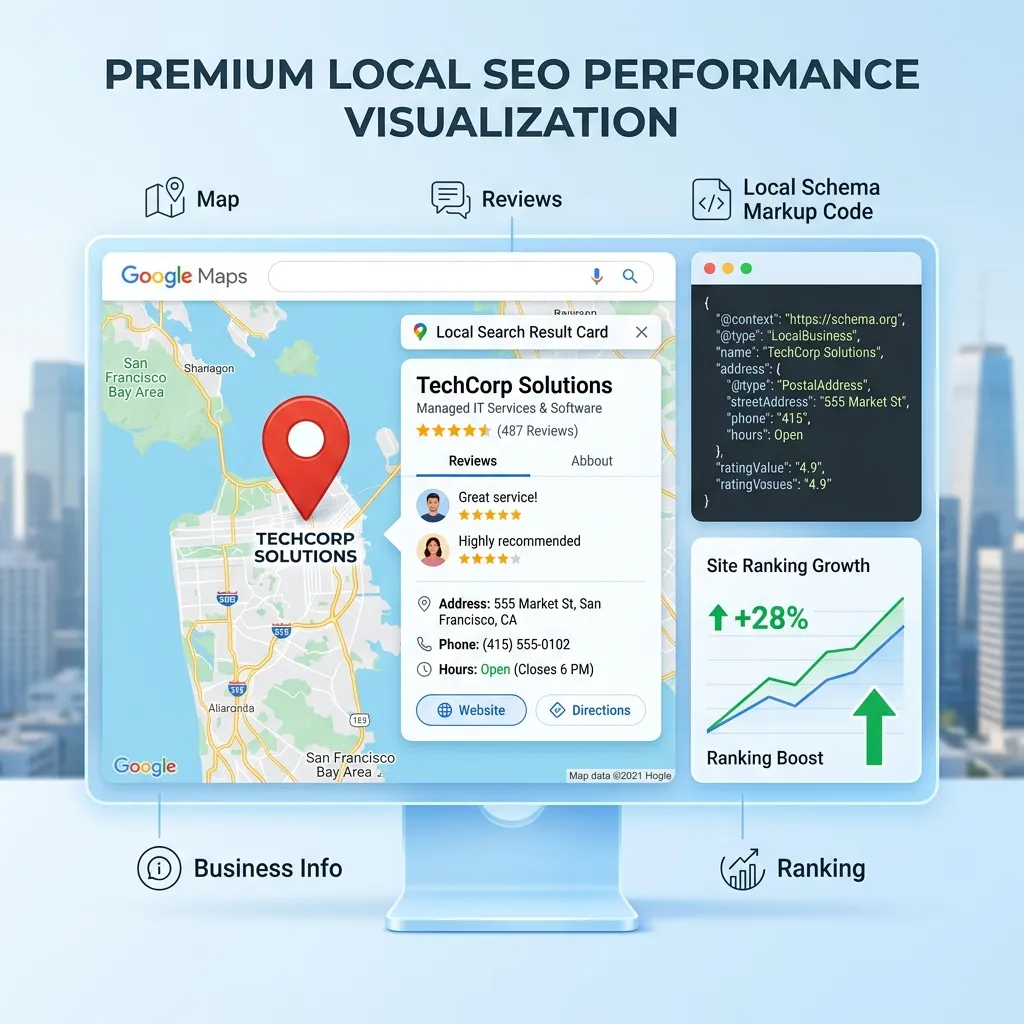
Google Business Profile Optimization Guide 2026: Complete Local SEO Strategy
Learn how to optimize your Google Business Profile for local search rankings in 2026. Complete guide covering verification, posts, reviews, photos, and advanced features for Indian businesses.

Voice Search Optimization for Business: Complete Guide 2026
Learn how to optimize your website and content for voice search — covering natural language queries, featured snippets, schema markup, and local search strategies for AI-powered assistants.
Get Professional AEO / GEO Services
Achieve 48% AI share of voice — optimise content for Google AI Overviews, ChatGPT, Perplexity, and Claude.
